It started with a single fiddle-leaf fig that would not stop leaning toward the window. Then came a trailing pothos on the bookshelf, a snake plant in the bathroom, and eventually a windowsill so crowded with cuttings in jars that a friend joked I was running a nursery out of my living room. What I did not have was a plan — just plants, acquired one impulse buy at a time, sitting in a room that otherwise looked like it belonged to someone who did not care about greenery at all. That gap between loving plants and actually designing around them is exactly where biophilic design lives in 2026, and it is why the trend has moved so far past just owning houseplants.
Biophilic design — the practice of building a felt connection to nature into interior spaces — has been a design-world talking point for years, but 2026 marks a shift in how seriously it is being treated. It is no longer a single trailing plant on a shelf. It is showing up in wallpaper prints, textile choices, furniture silhouettes, lighting, and even how rooms are laid out in relation to windows and views. Below is a look at where the trend is actually heading this year, and how to bring it into a home without turning every room into a greenhouse.
Botanical Prints Are Getting Bolder, Not Cuter
For a long time, botanical print meant a small ditsy floral on a throw pillow. That is changing. Wallpaper and fabric houses have been leaning into large-scale, almost mural-like botanical patterns — oversized leaves, tropical fronds, and densely layered foliage prints that cover an entire wall rather than accent a corner. Design coverage heading into 2026 has repeatedly pointed to maximalist botanical wallpaper as one of the strongest pattern stories of the year, with palm, fern, and jungle motifs replacing the more restrained florals that dominated a few seasons ago.
What makes this different from the botanical prints of the past decade is scale and confidence. Instead of a subtle pattern meant to blend in, these prints are meant to be the focal point of a room — a powder room, a stairwell, a reading nook — doing the work that a single piece of art used to do. Paired with plainer furniture, one bold botanical wall reads as intentional rather than busy.
Greenery Gets Layered, Like a Real Garden
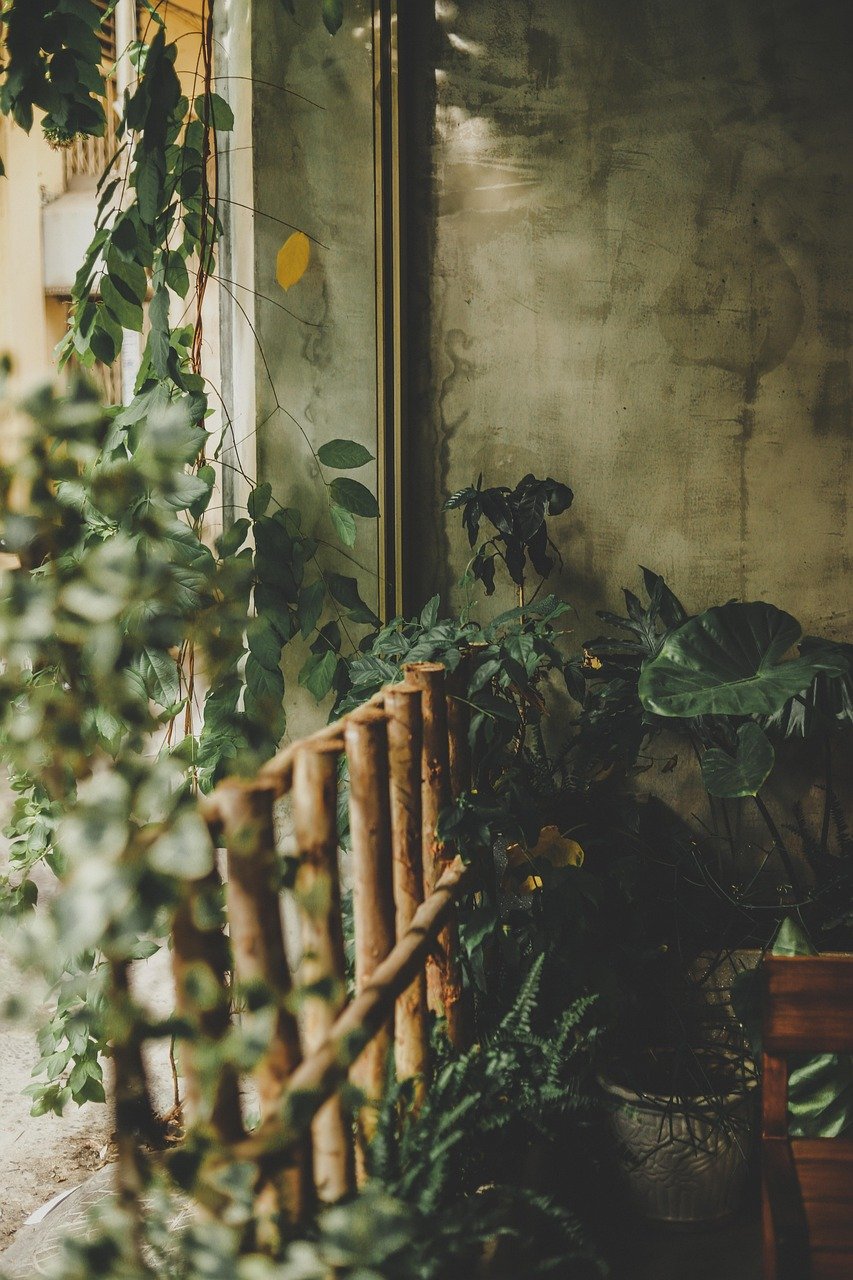
The other major shift is in how plants themselves are being styled. The Instagram-era look of one perfect monstera in a corner is giving way to layered, multi-height plant groupings that mimic how greenery actually grows outdoors — tall specimens in the back, trailing vines cascading from shelves, and smaller pots filling in gaps at different eye levels. Designers have been describing this as treating a plant collection like a garden bed rather than a series of individual accessories, with attention paid to leaf shape, texture, and color variation so the grouping reads as considered instead of accidental.
Living walls and moss installations, once reserved for offices and hotel lobbies, are also scaling down for residential use. Framed preserved-moss panels and small modular greenery walls are becoming realistic additions to a home office or entryway — low maintenance, since preserved moss needs no watering, but with the same visual density and calming effect as a full living wall.

Nature-Inspired Palettes That Go Beyond Sage Green
Green is still central to biophilic color schemes, but the palette has broadened considerably. Instead of the single muted sage that dominated a few years ago, 2026 color stories are pulling from a wider range of habitats — moss and forest greens, mushroom browns, sky-washed blues, stone grays, and the soft yellow-greens of new growth. The idea is less about matching a single trendy shade and more about building a palette that feels like it was pulled from an actual outdoor environment, with several related tones layered together the way they would appear in a landscape.
This is also showing up in how these colors are used: not just on walls, but distributed across upholstery, ceramics, and even kitchen cabinetry, so a room feels cohesively nature-adjacent rather than having one green accent wall doing all the work.
Organic Shapes and Materials That Echo the Outdoors
Beyond color and pattern, biophilic design in 2026 is also about form. Rattan, cane, seagrass, and other woven natural fibers are appearing in lighting, headboards, and cabinet fronts, bringing texture that reads as handmade and organic rather than mass-produced. Stone — particularly in rounded, river-worn shapes for side tables and decorative objects — is being used to bring an unpolished, elemental quality into rooms that might otherwise feel too tidy.
Even hardware and fixtures are picking up the theme, with leaf-shaped drawer pulls, branch-form sconces, and ceramic vessels glazed to look like weathered pottery. None of these pieces need to dominate a room; a few well-chosen organic objects do more for the biophilic feel than a room full of matching nature-themed decor.
Blurring the Line Between Inside and Outside
The most ambitious expression of this trend is architectural rather than decorative: homeowners and designers are prioritizing sightlines to the outdoors, whether that means swapping heavy drapery for sheer panels that let a garden view read clearly from the sofa, adding a small breakfast nook angled toward a window, or grouping seating to face outward rather than toward a television. Even in apartments without much of a view, this trend translates into maximizing whatever natural light is available and keeping windowsills clear enough to actually use as plant shelves rather than storage.
The underlying idea across all of these trends is the same: nature should feel woven into daily life at home, not staged for a single photo. A layered plant collection, a bold botanical print, a woven light fixture, and a palette borrowed from the outdoors can all coexist in the same room without competing, because they are pulling from the same source. That is the real shift in biophilic design for 2026 — it has stopped being a single design gesture and started being a full approach to how a home is built, colored, and furnished from the ground up.