
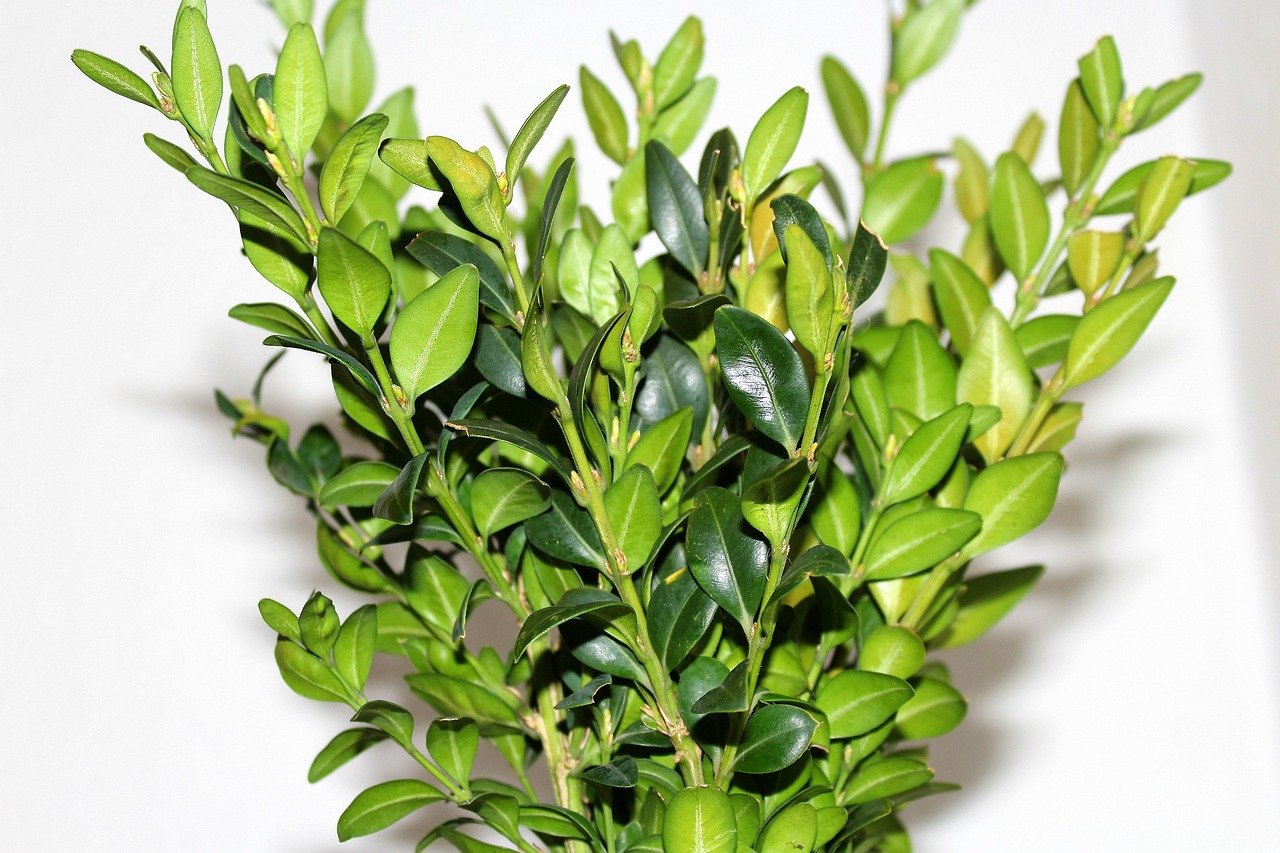
The boxwoods along my front walk are the oldest living things I have ever planted on purpose. They survived a hard freeze, a bad deer winter, and one very ambitious hedge trimmer. So when I started seeing headlines this month about a caterpillar that can turn a whole hedge brown in a matter of days, I walked outside with a flashlight after dinner and parted the leaves like I was searching for a lost earring. Nothing was there. But I kept looking longer than I want to admit, and I have been thinking about it since. If you own even a few boxwoods, this is worth ten minutes of your weekend. (A few of the products below are affiliate links, and as an Amazon Associate, I earn from qualifying purchases if you buy through them, which costs you nothing extra and helps keep this site running.)
The pest is the box tree moth, and it is not a hypothetical anymore. The Maryland Department of Agriculture put out a new notice on September 24 expanding its quarantine to a ninth county, and quarantines have been added in Ohio and New Jersey this year too. Here is what is actually happening, how to recognize it, and what to do before winter.
What the Box Tree Moth Is and Why It Is in the News
According to the Maryland Department of Agriculture, the box tree moth is “a federally regulated insect that is native to East Asia. It was first identified in the United States in 2021,” and it has since spread across multiple northeastern and mid-Atlantic states (see the department’s September 24 public notice). Boxwood is a big target. Hoodline’s August report on the spread through Maryland, Virginia, and Delaware notes that boxwood is the top-selling broadleaf evergreen ornamental shrub in the country, with roughly $140.9 million in annual sales.
The reason people are paying attention now is speed. Hoodline reports that the caterpillars can kill a boxwood hedge in one to two months by first eating the leaves and then stripping and girdling the bark. In warmer climates like Virginia, it says the moth can produce up to five overlapping generations a year.
Where Quarantines Stand Right Now
The map is changing quickly, so check your state agriculture department for the current list. Here is what I found as of early October 2026:
- Maryland: nine counties are quarantined. Allegany, Frederick, Garrett, and Washington were added in March; Caroline, Cecil, Kent, and Queen Anne’s in August; and Harford on September 24, according to the state’s notice.
- Ohio: WCPO in Cincinnati reports that the state declared a quarantine in April covering Butler, Clermont, Hamilton, Warren, Greene, and Montgomery counties, prohibiting boxwood transport from those areas.
- New Jersey: an expanded quarantine order approved August 26 covers Cape May, Cumberland, and Atlantic counties, per the state order.
- Virginia and beyond: Northern Virginia Magazine reports that Virginia detected the moth in Loudoun County last year, and lists confirmed infestations in Delaware, Massachusetts, Michigan, New Jersey, Ohio, Pennsylvania, and West Virginia.
Quarantine rules mostly hit nurseries, which need inspections and compliance agreements to ship boxwood out of a regulated area. For a homeowner, the takeaway is simpler: if you live in or near one of these counties, the moth is probably closer than you think.
How to Recognize It (Before You Panic About Normal Boxwood Problems)
Boxwoods get plenty of ordinary problems, so it helps to know what is specific to this moth. The Maryland Department of Agriculture’s identification page describes the signs:
- Young caterpillars are plain green, about half an inch long, with black head capsules. Later on, “they develop black and white stripes with black dots” and reach about 1.6 inches.
- Feeding damage starts as “windowpanes,” where the caterpillar eats one side of a leaf. Older caterpillars skeletonize the leaf, leaving only the midrib.
- Frass and webbing: look for green-black droppings and silk webbing around affected branches.
- Adult moths have a wingspan of about 1.7 inches, with white wings bordered in brown.
Chris McKeown, owner of Bloomin Garden Center in Blue Ash, Ohio, told WCPO what homeowners there keep getting wrong: “So you see all this webbing and you might even think that your boxwood has been overrun by spiders but it’s not, it’s their worms.” He also described how fast it goes, saying the destruction happened in “like a week.” New Jersey’s quarantine order is even more specific, warning that defoliation can occur within 10 days.
The Part Most Articles Skip: Winter
The Maryland Department of Agriculture explains that the box tree moth overwinters as caterpillars, “primarily as 3rd or even 4th instars, in a protective silk covering called a hibernaculum,” and resumes feeding around March. In other words, a hedge that looks fine in November can still be holding a few tiny caterpillars tucked inside silk shelters, waiting to start eating again in spring.
That makes fall the right time to look closely at the inside of your shrubs, not just the outer leaves. Part the branches and check the interior for webbing, frass, or small silk-covered clumps. Then repeat the check in March. If you find something suspicious, do not just treat it and move on. The department asks residents to report suspected infestations through its online form, with photos.
What to Do This Week
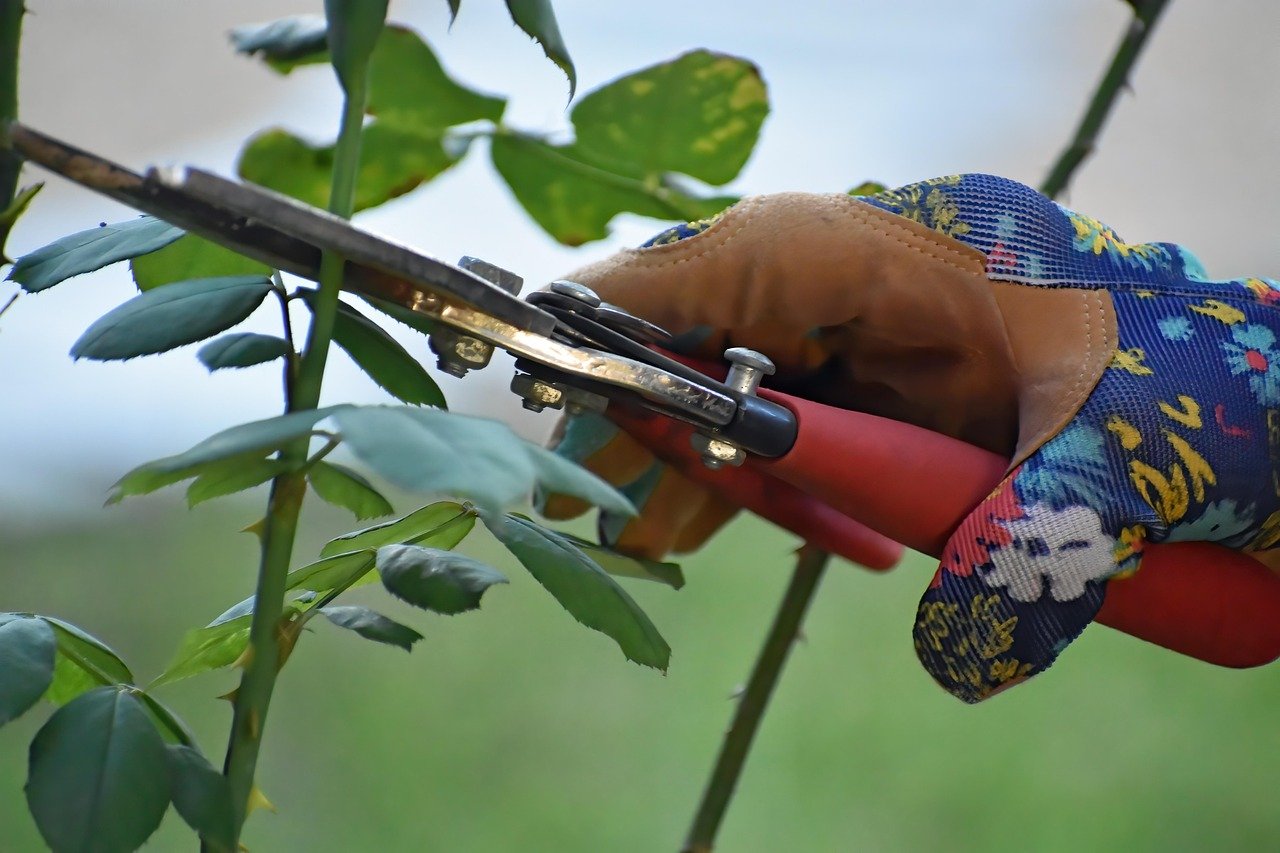
The Maryland Department of Agriculture is blunt about one thing: it “does not have the resources to do residential treatments.” That means you are the first responder. For a small, early infestation, the state’s recommended options are hand-picking caterpillars, spraying them off with water, pruning infested branches, or removing the whole plant.
1. Inspect with decent light and a magnifier
Caterpillars hide deep in the shrub and the early ones are small, so a bright flashlight and some magnification make a real difference.
A handheld 10x magnifier and a good headlamp live in my gardening drawer for exactly this reason.
2. Treat caterpillars with a product made for caterpillars
Michael Raupp, a University of Maryland entomologist, writes in his Bug of the Week column that insecticides containing Bacillus thuringiensis (Bt) and spinosad “are dynamite for controlling caterpillars but safe enough to be used in organic food production.” Bt only works when caterpillars eat the treated leaves, so coverage matters. McKeown told WCPO that spinosad is highly effective but pricier, that the spray should go on inside the plant, and that applications should repeat every few weeks until late fall.
Always follow the product label, and check with your state extension service about what is right for your area, since I am not a pest control professional.
If you want to start with the gentler option, look for a Bt caterpillar spray that lists caterpillars on the label. If the infestation is heavier, a spinosad-based garden spray is the stronger choice, and it is the one McKeown named first.
3. Bag and bin infested material, never compost it
Raupp’s instruction is short and worth memorizing: “Any infested material should be doubled bagged in plastic bags and placed in the trash.” Compost piles and yard-waste piles can move the caterpillars somewhere you do not want them. Thin kitchen bags tear on woody branches, so I use heavy ones.
A box of 42-gallon contractor bags is cheap insurance, and it is the right size for pruned branches.
4. Add a trap if you live near a quarantine zone
Extension guidance reported by Nursery Management recommends placing pheromone traps starting in early May to monitor for the first flight of adult moths. The advice is aimed at growers, but the idea works for a homeowner too: a trap tells you whether adults are around before you ever see damage on the hedge. Traps do not protect the shrubs on their own, but they give you a warning.
You can find a box tree moth pheromone trap online. Hang it near your boxwoods in spring and check it weekly.
Should You Replace Your Boxwoods?
Not necessarily. A healthy, regularly inspected hedge outside any quarantine area is a reasonable thing to keep. But if you are planning a new planting, or you live in one of the hard-hit counties and are staring at a hedge that is already half gone, it is fair to consider other shrubs. McKeown suggested Bowling Ball arborvitae as a boxwood substitute for customers worried about losing plants.
Cornell’s Brian Eshenaur, a senior extension associate with New York State Integrated Pest Management, keeps a fact sheet of boxwood alternatives that begins with the reason people loved boxwood in the first place: “Boxwoods are traditional evergreen shrubs that offer good resistance to deer browse.” His list of substitutes includes:
- Inkberry holly (Ilex glabra), zones 5 to 9, native to New York State, with a cultivar called ‘Gem Box’ that has boxwood-like leaves.
- Japanese holly (Ilex crenata), zones 5 to 8, with small dark green leaves that shear easily.
- Dwarf Hinoki cypress (Chamaecyparis obtusa ‘Nana’), zones 5 to 9, for full sun.
- Plum yew (Cephalotaxus harringtonia), zones 6 to 9, which tolerates shade.
- Bayberry (Myrica pennsylvanica), zones 3 to 7, native, with waxy gray fruit that birds eat.
Check the zones against your own yard before you buy.

Buying Boxwood This Fall
Fall is a popular time to plant shrubs, which means fall is also when garden centers are full of boxwood. A few habits are worth adopting. Look under the leaves and into the center of any plant before you buy it, ask the nursery where its stock came from, and keep new plants away from your existing hedge for a few weeks. In a quarantine county, the rules on moving boxwood and boxwood debris are real, so skip sharing cuttings with friends.
The moth also flies. Hoodline reports adults can disperse naturally three to six miles a year, so even a careful gardener can find caterpillars arriving from elsewhere.
My Plan for the Front Walk
I am not tearing anything out. My plan is to run a flashlight through the interior of each shrub every couple of weeks until the first hard freeze, look again the first warm week of March, and hang a trap in early May. If I find webbing, I will photograph it, report it, and handle it the way the state recommends. The thinnest corner of the front bed is also getting an inkberry holly this fall, so that if the moth reaches my street I will not lose the whole walk at once.