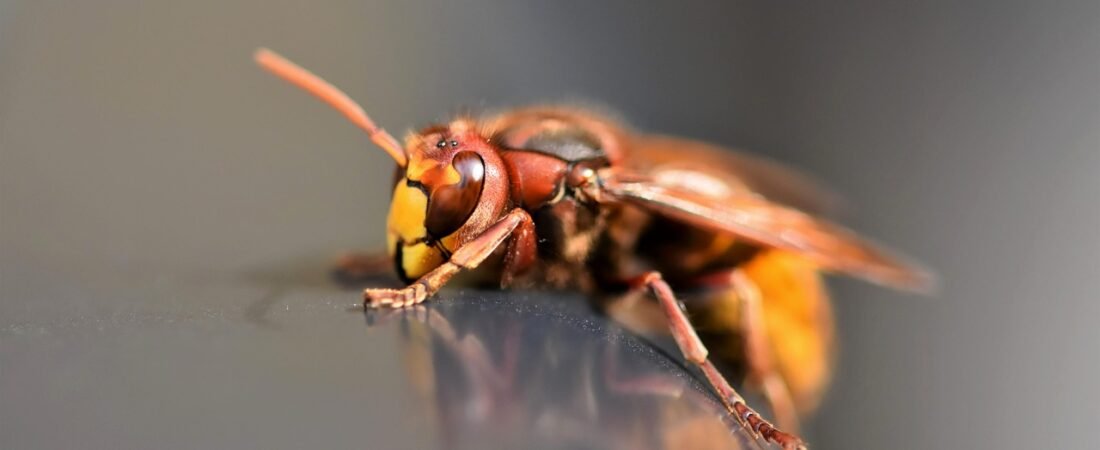
If you’ve spent any part of September pulling weeds, watching bees work your zinnias, or hanging up your last hummingbird feeder of the season, there’s a new insect you need to know about — and no, it isn’t a spotted lanternfly or a joro spider. The yellow-legged hornet (Vespa velutina), a bee-killing invasive from Southeast Asia, has expanded its U.S. foothold from a single nest near Savannah, Georgia, in 2023 to hundreds of confirmed nests across Georgia and South Carolina, with the first confirmed detection in North Carolina announced in late July 2026 and homeowner alerts now going out in Florida, too (as an Amazon Associate, I earn from qualifying purchases on any product links below, which is one of the ways a small garden blog like this one keeps the lights on). Unlike the paper wasps most gardeners already tolerate near the compost pile, this hornet builds colonies of thousands and specializes in ambushing honeybees right at the hive entrance — a habit that has already hurt honey production across Europe and is now worrying entomologists, beekeepers, and backyard gardeners throughout the Southeast.
What Exactly Is the Yellow-Legged Hornet?
Vespa velutina is native to tropical and subtropical Southeast Asia. It first turned up in Europe near Bordeaux, France, in 2004, likely arriving in a shipment of pottery, and spread across the continent over the following two decades, weakening honeybee colonies and cutting honey yields wherever it took hold. It reached the United States for the first time in Savannah, Georgia, in November 2023, almost certainly via cargo ship. Adults measure roughly three-quarters of an inch to a full inch long, with a dark brown-to-black thorax, distinctive yellow-tipped legs (hence the common name), and a mostly dark abdomen with a lighter yellow-orange band near the tip. According to UF/IFAS Extension, a single queen can found a colony that swells to around 6,000 individuals by late summer.
How Far It Has Spread by September 2026
The numbers tell the story of how quickly this insect has taken hold. In South Carolina’s Lowcountry, where Beaufort County became the initial hotspot, response teams removed just 16 nests in 2024. By 2026, that number had jumped to roughly 500 nests destroyed and more than 4,000 queens trapped using a bait mixture beekeepers call “Georgia juice” — dark brown sugar mixed with white grape juice, according to South Carolina Public Radio. The hornet has since been confirmed in York County, South Carolina, and on July 27, 2026, the North Carolina Department of Agriculture and Consumer Services confirmed its first detection in the state, in Matthews (Union County), after a homeowner noticed unusual activity around a hummingbird feeder. Additional adults have since been spotted near the Union-Mecklenburg county line. A separate hornet was even intercepted aboard a cargo ship in Vancouver, Washington — a reminder that new, unrelated introductions can happen almost anywhere. As Caroline Oatley, a hornet hunter working with Clemson University’s response team, put it: “We’re seeing that yellow-legged hornets can be introduced in any region.”
Why Gardeners and Beekeepers Are Worried
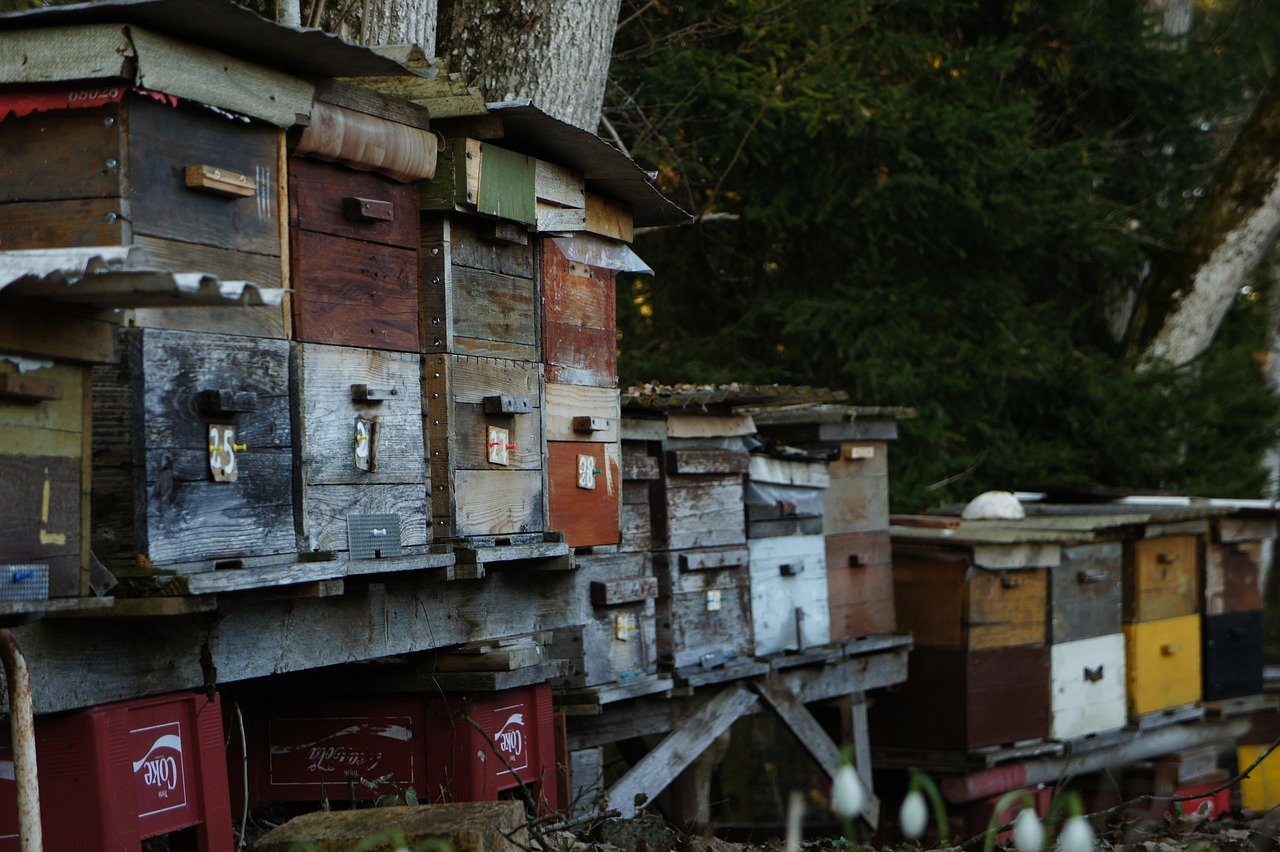
What makes this hornet different from the wasps already living around your shed is its hunting style. Yellow-legged hornets practice “hawking” — hovering just outside a beehive entrance, snatching returning foragers out of the air, then dismembering them and flying off with only the nutrient-rich thorax to feed their larvae. Brad Cavin, who leads a response team at Clemson University, summed up the underlying worry beyond honey production: “My number one question is what’s going to happen to agriculture,” he told South Carolina Public Radio, noting that a single hive can be worn down until the colony collapses. Removing an established nest is neither cheap nor simple — costs can run up to $3,000 per nest, and crews sometimes use tree climbers to reach nests built 100 feet up, later freezing the removed nests for at least 72 hours to make sure nothing survives. For residents living near known nests, the anxiety is personal. Hilton Head homeowner Mike Lewis told reporters, “It’s scary. We have granddaughters. We want to protect them.” In North Carolina, officials are just as direct: Bill Foote, director of the NCDA&CS Plant Industry Division, described it as “this aggressive pest of honeybees and other pollinators,” while State Apiarist Don Hopkins has warned that hawking behavior at hive entrances “cause[s] reduced foraging and colony failure,” translating into real losses for honey production, pollination, and crop yields.
How to Tell It Apart From the Wasps You Already Know
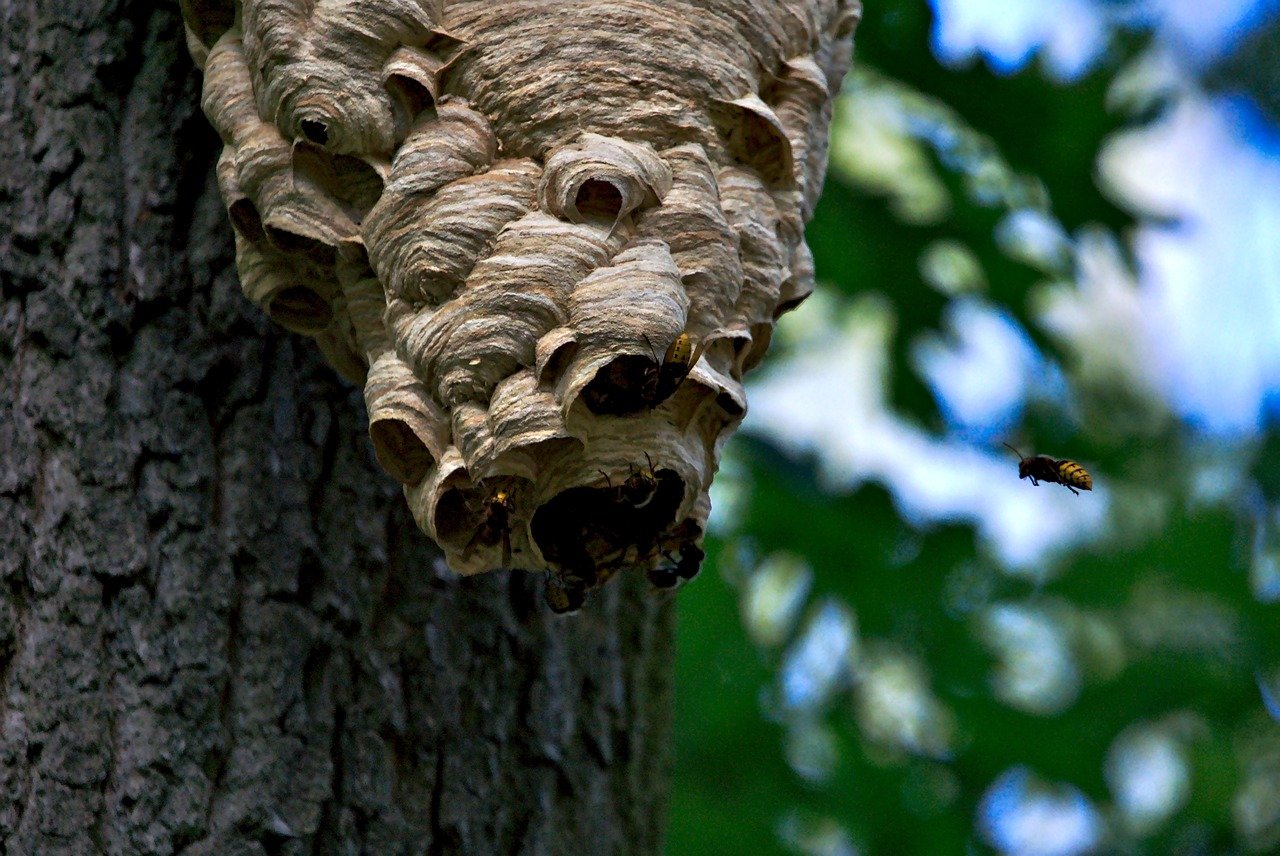
Because it resembles a southern yellowjacket or a bald-faced hornet at a glance, misidentification is common — extension offices report plenty of native wasps get reported (and killed) by mistake. A few features help separate the real thing: yellow-legged hornets have consistently yellow-tipped legs, a mostly dark abdomen with a narrow orange-yellow band near the tip, and an orange or yellow face. Their nests are a giveaway too. Instead of the open, umbrella-shaped paper wasp nests you might find under an eave, yellow-legged hornets build fully enclosed, egg-shaped paper nests that start out golf-ball sized in spring and can grow larger than a basketball by late summer, often built high in trees or occasionally on structures, and typically a muddy, reddish-brown color rather than the gray of a native bald-faced hornet nest.
What to Do If You Spot One in Your Yard
Extension entomologists in every affected state give the same core advice, and it’s worth following to the letter:
Do not approach or attempt to knock down a suspected nest yourself — established colonies can hold thousands of hornets and will defend the nest aggressively. Do not try to capture a live hornet. Instead, photograph it from a safe distance if you can, note the exact location, and report it to your state’s agriculture department. North Carolina residents can report sightings and find trap instructions at ncagr.gov/YLH; Florida residents can call FDACS-DPI at 1-888-397-1517 or use its online reporting system; gardeners elsewhere in the Southeast should contact their local extension office or the USDA’s APHIS hotline. Just as importantly, don’t destroy a wasp nest of any kind without confirming what it is first — many native wasps are beneficial pollinators and pest controllers, and extension offices would rather field an extra photo than lose a helpful native species by mistake.
Gear Worth Keeping On Hand This Fall
While professional removal is the right call for an actual colony, a few tools can help you monitor activity in your own yard and stay safer while doing routine fall garden work near trees and shrubs. A basic wasp and hornet trap hung near suspected activity (not near your vegetable beds or flowering plants, so you don’t catch beneficial insects) can help you and your local extension office confirm whether something unusual is flying around before a colony gets established. A pair of sturdy, long-cuffed protective garden gloves is a smart, low-cost upgrade if you’re doing any pruning or clean-up near dense shrubs or treetops this fall. And if you like being able to identify exactly what’s buzzing around your garden — native wasp, bald-faced hornet, or something that warrants a call to extension — a compact insect identification field guide pays for itself the first time it saves you from destroying a beneficial nest by mistake.
The Bigger Picture for Fall Gardens
This story is still unfolding one county at a time, and that’s exactly why fall garden chores are a good moment to pay attention. As you do end-of-season pruning, take down old hummingbird feeders, or clear brush before winter, take an extra minute to look up into tree canopies and around shed rooflines for anything resembling an enclosed, muddy-brown paper nest bigger than a volleyball. The spread from one nest near Savannah in 2023 to hundreds of nests and thousands of queens across three states by 2026 shows how quickly an invasive pollinator predator can establish itself when it isn’t caught early — and how much a single homeowner’s photo of unusual activity at a bird feeder, like the one that led to North Carolina’s first confirmed detection, can matter. Keeping an eye out this fall, and reporting anything suspicious rather than guessing, is the simplest thing any gardener in the Southeast can do to help protect the bees already working overtime in their yards.