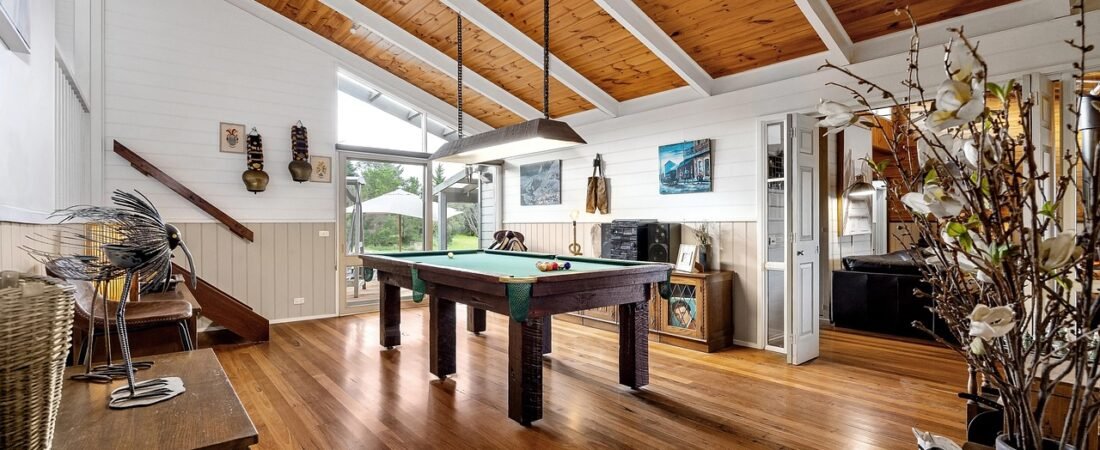
In Falls Church, Virginia, Paige Hahn’s family got tired of walking into the house and finding mahjong taking over the main living space, so she turned a spare room into a dedicated game room instead. In Coppell, Texas, Marla Williams built out a room so central to her house that she says, “Right when you walk in my house, the first thing you’re going to see is my mahj area.” Neither renovation was about resale value — both were a response to a weekly habit that had outgrown a folding table pulled out of a closet. Houzz’s 2026 Emerging Summer Trends Report backs up what these homeowners already knew: searches for “mahjong room” are up nearly 20x year over year, “card room” searches are up 129%, and “board game room” searches are up 45%. This roundup gathers the specific upgrades — the table, the lighting, the seating, the storage — that are turning spare rooms across the country into rooms built for game night. As an Amazon Associate, I earn from qualifying purchases, so a few of the picks below link to the kind of pieces these homeowners actually used.
1. Reclaim the Room Nobody Uses
The easiest version of this trend doesn’t require an addition — it requires an honest look at which room in the house is doing the least work. When Kate Holland and her husband built their home in Argyle, Texas, they skipped a formal dining room in favor of a flex room sized for three mahjong tables. She told Axios it’s become “one of the most-used rooms in our home.” Homeowner Jennifer Miller, whose Alexandria mahjong room replaced an underused dining table, put the philosophy even more plainly: “Don’t overthink it. It’s just a place for people to congregate.” If a dining room only comes out for holidays, or a guest room sits empty eleven months a year, it’s already a candidate for this kind of swap.
2. Upgrade the Table Itself
A folding table with a bedsheet thrown over it is not what’s driving these search numbers. Charlotte-based interior designer Ashley Sussman told Axios the goal is furniture that earns its keep: “Think tailored seating, beautiful lighting, and tables designed to feel like furniture, not folding card tables.” In practice, that often means an automatic mahjong table with a built-in shuffle-and-deal mechanism — the centerpiece in both Marla Williams’ and Jennifer Grillo’s rooms — paired with upholstered chairs instead of stacking ones. A automatic mahjong table or a furniture-grade game table with matching chairs is the single upgrade that makes a room read as intentional rather than improvised.
3. Light It Like You Mean It
Overhead builder-grade lighting is the fastest way to make a game room feel like an afterthought. Sussman’s advice on lighting wasn’t a throwaway line — it’s the detail that separates a corner from a room. Jennifer Grillo’s Arlington mahjong room, carved out of a former dining room, got a statement fixture directly over the table instead of relying on the room’s original recessed cans. A single well-placed pendant light over the table does more for the space’s mood than any other single change, and it’s usually the cheapest one on this list.
4. Go Bold with Color and Pattern
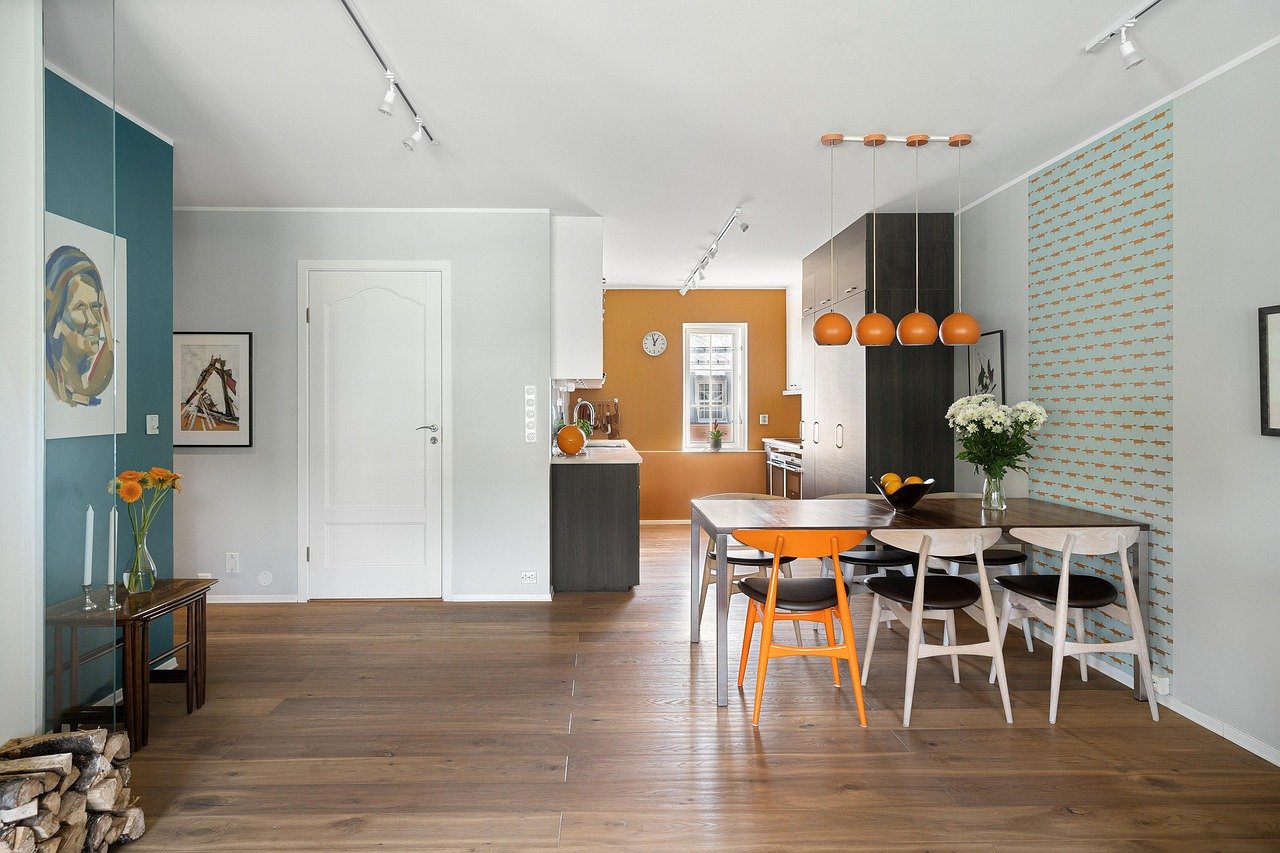
Because a game room isn’t trying to double as a home office or a nursery, homeowners are treating it as the one place in the house where they can commit to a mood. Charlotte homeowner Martha Kinney described her approach directly: “It was a beautiful space to begin with, but I wanted to make it cosy and ‘vibey.’” Jennifer Grillo’s Arlington room leaned into floral wallpaper with glossy pink and green paint; Coppell’s Marla Williams built her room around a blue circular rug and watercolor floral art. Peel-and-stick wallpaper or a bold round area rug are both low-commitment ways to borrow that same energy.
5. Build In Spectator Seating
Mahjong, cards, and board games are rarely a four-person, closed-door activity anymore — they’re a standing weekly event with an audience. Marla Williams’ room in Coppell is set up to host weekly gatherings with dedicated spectator seating around the perimeter, not just chairs pulled up to the table. Kate Holland’s flex room was sized specifically to fit three separate mahjong tables at once, so multiple games can run in parallel while people wait or watch. A few extra accent chairs along the wall turn a room built for four into a room that can comfortably hold ten.
6. Give Tiles, Cards, and Chips a Home
Houzz’s data shows this isn’t limited to mahjong — searches for “card room” are up 129% and “poker room” is up 38%, and the common thread across all of them is storage that’s meant to be seen, not hidden. In Coppell, Carol McGuire displays her tile sets in thrifted crystal bowls rather than in their original boxes, alongside rainbow-colored game mats on open racks. That same instinct works for any game night staple: a decorative storage bowl for tiles or dice, a proper card storage case, or a poker chip set that comes with its own case all keep the room’s real function visible even when no one’s playing.

7. Make It a Dedicated Space — On Purpose
The upgrade that every homeowner interviewed for this piece agreed on wasn’t a specific product, it was the decision to stop sharing the room at all. Paige Hahn put it simply: her family was “getting a little tired of walking in and having mahjong in the main space,” and once the game had its own room, “everybody’s much happier.” Jennifer Grillo echoed the same relief: “It’s nice to have an extra space for entertaining that you’ll actually use.” There’s a reason this particular hobby is being given its own square footage instead of getting folded back into the living room. Mahjong historian and clinical psychologist Gregg Swain told Axios that the game is “one of the best things that you can do for your brain” — which tracks with Houzz’s own data showing “wellness room” searches up 164% this year. A room built for a standing weekly game isn’t just decor. It’s the one piece of the house that’s guaranteed to get used on purpose, every single week.

None of the rooms above started as a renovation project — they started as a folding table that kept getting pulled out of the same closet until someone finally gave it a permanent address. That’s the real difference between this trend and most “room of the year” lists: it isn’t aspirational, it’s overdue. If there’s a table in your house that gets set up and broken down every week for the same three or four people, it’s already telling you which room wants to be next.