
Last month, my neighbor Denise told me over the fence that she and her husband had “given up” on the idea of moving to a bigger house. Not because they didn’t want more space, she said, but because the math simply stopped making sense — their current mortgage rate was locked in at 3.2%, and anything they’d buy now would cost nearly double in monthly payments for roughly the same square footage. So instead of listing their house, they’re gutting the primary bathroom and finally building out the attic. I’ve now had some version of this same conversation with four different people this year, which is usually my signal that something bigger is going on than a few isolated decisions. It turns out the data backs up exactly what I was hearing on the sidewalk: staying put and renovating has become the default move for a huge share of American homeowners in 2026, and it’s reshaping what “home improvement” actually looks like.
The Math That’s Keeping People in Place
The 2026 State of the Nation’s Housing report from Harvard’s Joint Center for Housing Studies lays out why so many homeowners are choosing renovation over relocation. Existing home sales still haven’t recovered from the 30-year low they hit in 2023, and homeownership rates have now declined for a second consecutive year. The reason is almost entirely financial: monthly payments on a median-priced home reached roughly $3,100 in late 2025, up from just $1,700 in early 2020, and the income needed to comfortably afford that median home has jumped from about $66,000 to over $120,000. When moving costs that much more than staying, staying starts to look like the smarter renovation.
Renovate, Don’t Relocate: What Homeowners Are Actually Planning
Houzz’s 2026 Renovation Plans Report, based on a survey of over 1,000 U.S. homeowners, found that 91% intend to move forward with their planned projects this year, and 67% will keep their project scope the same or expand it rather than scale back. Perhaps the most telling number: 62% of renovating homeowners expect to stay in their homes for at least 11 more years after the work is done. That’s not a quick flip-and-list mentality — it’s people investing in houses they plan to live in for the long haul. As Marine Sargsyan, Houzz’s head of economic research, put it, “Homeowners are committed to their planned projects in 2026, fully aware of the challenges ahead.” Confidence isn’t universal, though — it splits sharply by income, with 64% of households earning $150,000–$200,000 describing themselves as “very confident” about their projects, compared to just 32% of those earning $50,000–$100,000.
Where the Renovation Dollars Are Actually Going
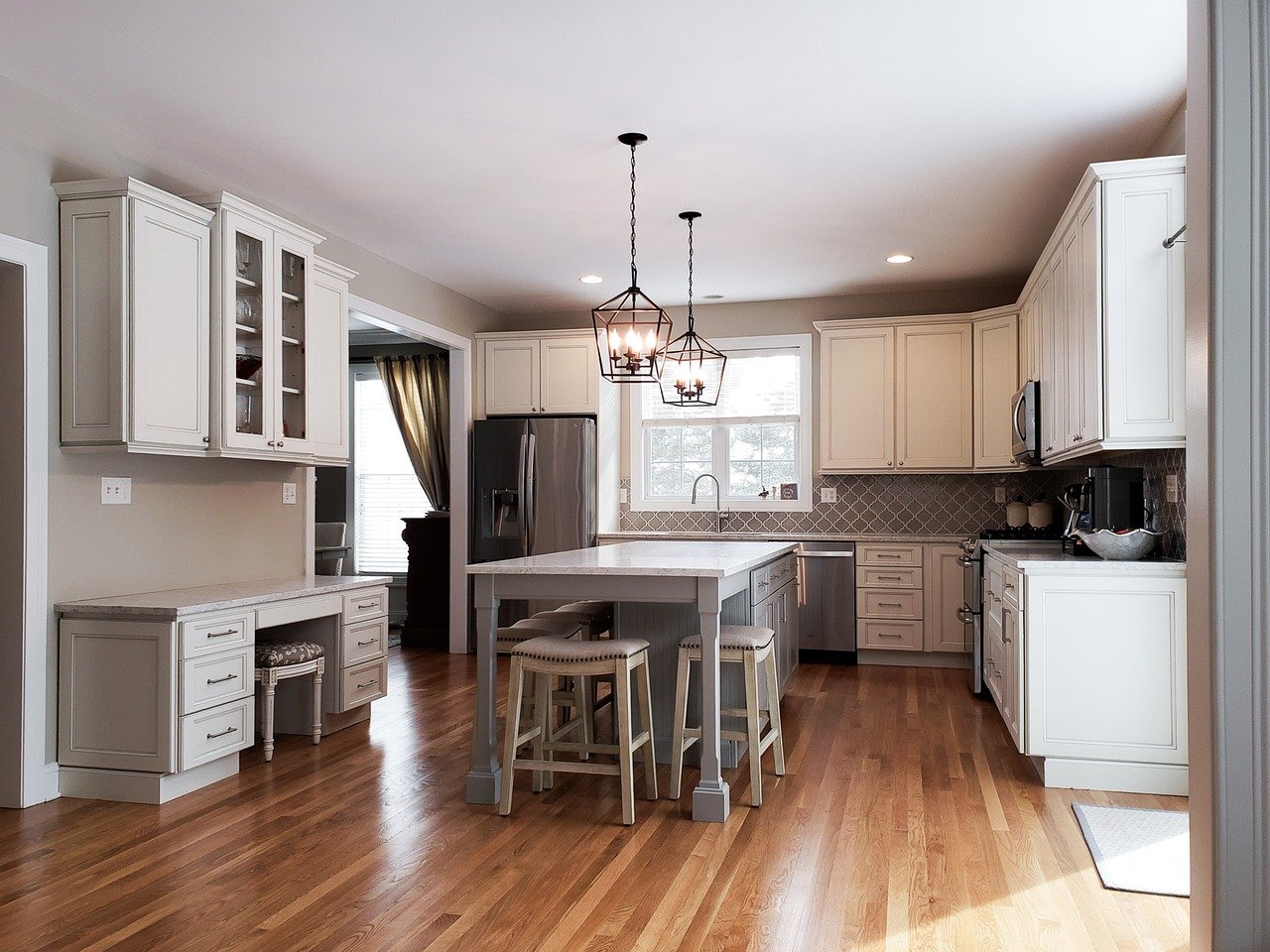
Houzz’s broader 2026 remodeling data shows renovation activity holding firm even as some caution creeps in. The median renovation spend in 2025 was $20,000, flat year over year, but spending at the high end is climbing: the 90th percentile of renovation budgets reached $150,000, up 7% from $140,000 in 2024. Nearly a third of homeowners (31%) are taking on projects of $50,000 or more. What’s changed is how people are paying for it. Credit card use for renovation financing jumped five percentage points year over year to 34%, and for projects over $50,000, 23% of homeowners are turning to home equity loans. Sargsyan noted that “home renovation continues at historic levels even as homeowners take a more cautious approach to future projects” — a split between people already committed to work in progress and a slightly more hesitant group still planning for 2026.
Budgets Are Getting Blown, and Everyone Knows It
Staying put doesn’t mean renovations are going smoothly. Among homeowners who set an initial budget in 2025, 37% ended up exceeding it, while only 35% stayed on target. More than half (52%) blamed higher-than-expected costs, 35% admitted they upgraded to pricier materials mid-project, and 32% ran into unanticipated complexity once walls came open. This tracks with what contractors have been saying anecdotally for the past year: material costs remain unpredictable, skilled labor is harder to book, and even a straightforward kitchen refresh can uncover outdated wiring or plumbing that turns a $20,000 job into something closer to $35,000. If you’re planning a renovation this year, building in a real cushion — not just a token 10% buffer — is less optional than it used to be.
A New Generation Enters the Renovation Market
One of the more surprising shifts in the 2026 data is who’s doing the renovating. Gen Z now represents a small but rapidly growing share of renovators, and 63% of Gen Z homeowners who renovated cited a recent home purchase as the trigger, compared to just 31% of Millennials, who are more likely to be renovating homes they’ve owned for years. That distinction matters: younger buyers who managed to get into the market despite high rates are immediately customizing rather than waiting, while longer-tenured owners like my neighbor Denise are renovating specifically because they’re staying in place indefinitely. Both groups are contributing to the same overall trend line, but for very different reasons — one is settling in fast, the other is settling in for good.

What This Means If You’re Renovating in 2026
If you’re weighing a renovation this year, the data suggests a few practical takeaways. First, you’re not alone in choosing to stay: this is now the majority behavior among U.S. homeowners, not a fallback plan. Second, financing your project responsibly matters more than ever, given how many people are leaning on credit cards and home equity lines rather than pure savings. Third, budget for surprises as a near-certainty rather than a worst-case scenario — over a third of renovators blew past their original number last year. And finally, if you expect to stay in your home for a decade or more, it’s worth designing for how you’ll actually live day to day rather than chasing whatever might theoretically boost resale value on a house you have no real plans to sell.
The Bigger Picture
What’s happening in 2026 isn’t really a design trend in the traditional sense — it’s an economic one that’s quietly rewriting how Americans think about home improvement. When moving costs nearly double what it did six years ago, renovating your existing walls stops being a lifestyle choice and becomes the rational one. Denise and her husband aren’t chasing a Pinterest board; they’re solving a math problem the housing market handed them. Multiply that decision across millions of households, and you get exactly what the Harvard and Houzz data show: a country full of homeowners quietly redoing kitchens, finishing attics, and gutting bathrooms not because they dream of a fresh start somewhere else, but because staying put has become the smarter, and often only, way forward.