
It’s 7:12 on a Tuesday and the Ostrander family is at the table — four plates, four phones, and almost no conversation. That scene, repeated in some form in millions of American kitchens, is exactly what a 2025 survey from Chicago’s Lurie Children’s Hospital put a number on: more than half of parents said screens were actively interfering with quality family time. Designers noticed the same thing from the other side of the tape measure. Clients weren’t asking for a smarter home anymore. They were asking for a quieter one.
That request has a name now. Interior designers and trend forecasters are calling it the “analog room” — and for 2026, it may be the single biggest shift in how Americans are redesigning their homes. Not a color. Not a finish. A deliberate, furnished argument against the phone.
The Analog Room Is 2026’s Most-Requested Space
A year ago, an “analog room” would have sounded like a niche request from a nostalgic collector. Now it’s showing up in ordinary renovation briefs. “I’m hearing a lot more requests from clients for designs that will help them ‘switch off,’” designer Joyce Huston told Hunker, describing a wave of homeowners asking for spaces built around books, board games, and conversation instead of screens.
The rooms taking shape look different from house to house, but the intent is the same. Some families are converting a guest bedroom into a home library stacked with actual paperbacks. Others are turning an awkward bonus room into a game room with a card table, a dartboard, and a shelf of records instead of a wall-mounted TV. Even dining rooms are getting redesigned with a small basket or drawer near the entrance — a designated place to park phones before anyone sits down, so dinner can go back to being dinner.
None of this requires rejecting technology outright, and no reputable designer is telling clients to unplug the whole house. The point is narrower and more useful: one room, or even one corner, that isn’t built around a charging cable.
The Living Room Stops Being a Shrine to the TV
For decades, the television dictated everything about how a living room was arranged — the couch faced it, the lighting deferred to it, the whole room organized itself around a rectangle of glass. That default is finally being questioned. “Living rooms that were once centred around a television are evolving into more sociable arrangements,” says Caroline Milns of Zulufish Interior Design Studio, who describes clients asking her firm to “reimagine areas of the home as intentional, screen-free sanctuaries.”
In practice, that means seating arranged to face each other rather than a screen, coffee tables sized for a board game or a shared plate of food, and televisions either tucked into cabinetry or swapped for framed art when they’re off. Milns puts the ambition simply: crafting rooms “that prioritise presence over distraction” so a space feels “enduring, personal and quietly luxurious” rather than engineered around a remote control.
You don’t need an architect to try a version of this. Pulling the sofa a few feet so it faces another chair instead of the television, or moving the TV off the main sightline into a media console with doors, does most of the work for the cost of an afternoon.

Lighting Does the Work Screens Used to Do
Take away the blue glow of a television or a tablet and a room needs something else to hold it together after dark — and designers say that something is layered, warm lighting. “When it comes to embracing analogue interiors, lighting shouldn’t be an afterthought,” says Chloe Barrow of Laura James, who points homeowners toward table lamps, dimmable sconces, and warm-toned bulbs in place of a single bright overhead fixture.
This is one of the cheapest trends on this list to try. A pair of secondhand lamps, a warm 2700K bulb instead of a cool-white one, and a dimmer switch on the overhead light can change the entire feeling of a room for well under $100. The goal isn’t dim for its own sake — it’s light that pools in a few places, the way candlelight or a fireplace does, instead of flooding every corner evenly the way a screen-lit room tends to.
The Reading Nook Is Back, and It’s Not Decorative
A reading chair by a window used to be a styling flourish — something that photographed well but rarely got used. Designers say that’s changing as people look for a specific, physical place to put a phone down. “A reading nook is so much more than just a cosy corner,” says Milena Vallier of My Bespoke Room. “It’s a retreat from the fast-paced, tech-filled world.”
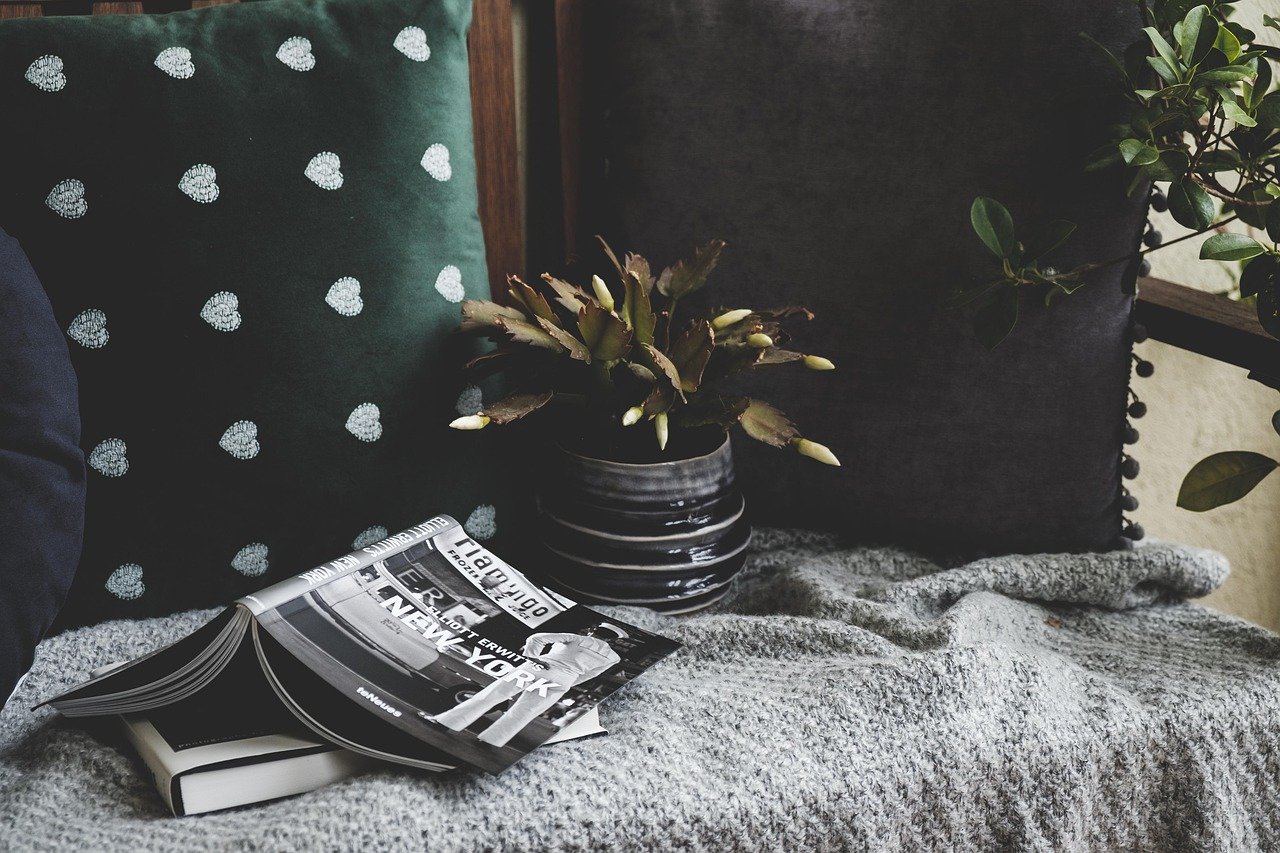
The formula holds up in almost any home, regardless of square footage: one comfortable chair, a reading lamp on its own switch (not tied to the room’s main lighting), a small side table, and a stack of actual books within reach. Apartment dwellers are doing this in a window bay or an unused corner of a bedroom; homeowners with more space are carving it out of a landing or a converted closet. The budget version and the designer version look nearly identical — the difference is mostly the chair.
Materials That Don’t Need an Update
The analog instinct is showing up in what people buy, not just how they arrange it. Designer Teresa Sarmiento of La Base Studio, quoted in Dwell’s 2026 trend coverage, put her finger on why: “When design depends on devices rather than spatial intelligence and material logic, it tends to age quickly.” A smart-home gadget is obsolete in five years. A well-made wood table is not.
That thinking is fueling renewed interest in furniture that’s built to be repaired and passed down rather than replaced — solid wood over particleboard, reupholstering a good frame instead of buying a new sofa, and modular pieces designers expect people to own for decades. It also connects directly to the vintage and secondhand shopping boom design writers have been tracking all year: buyers gravitating toward pieces with visible age and history over anything mass-produced and disposable. None of it needs a firmware update, and none of it will be obsolete next year.
Trying This on a Normal Budget
None of this requires a renovation loan. Start with the room in the house where screens accumulate the most — usually the living room or the kitchen table — and remove just one thing: the TV remote from arm’s reach, the charging cable from the counter, or the phone basket that lives by the front door instead of the bedside table. Add one seat that isn’t oriented toward a screen. Swap a single overhead bulb for a warm one and put a lamp somewhere it wasn’t before.
Then let the room earn its purpose slowly. A shelf of books doesn’t need to be full on day one. A game room doesn’t need a pool table to start — a deck of cards and a table people actually sit at will do the job. The point designers keep coming back to isn’t aesthetic at all: it’s that a room with no screen in it is one of the only places left in most homes where nothing is asking for your attention.
The Room With Nothing Asking For Your Attention
Back at that Tuesday dinner table, the fix wasn’t complicated. A small tray by the kitchen door, a house rule about where phones charge overnight, and eventually a reading chair in the corner of the living room that had sat empty for years. None of it looked like a design magazine spread. What it did instead was give one part of the house a job that had nothing to do with a screen — which, this year, might be the most valuable square footage in the building.