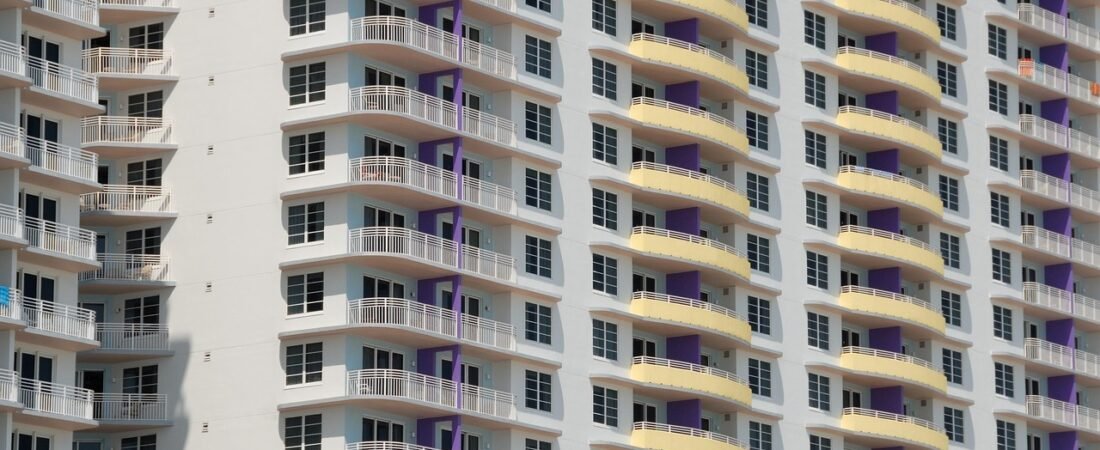
Condo prices are falling in more American cities than at any point in over a decade, and the drop is steep. A September 2026 analysis of Zillow Home Value Index data by Wolf Street found condo values down 15% to 34% from their peaks in 34 larger U.S. markets, with another 35 cities off 8% to 14%. In six metro areas, including Cape Coral, Florida, and Oakland, California, condo prices have fallen all the way back to where they stood 20 years ago.
This isn’t a broad housing downturn. Single-family home prices in most of the same metros are flat to slightly up. It’s a condo-specific reckoning, and it traces back to something buyers rarely think about when they fall for a unit’s granite counters and low list price: the building underneath it. Rising HOA fees, six-figure special assessments, and insurance premiums that have nearly doubled in five years are making condo ownership far more expensive than the sticker price suggests, and buyers are noticing.
The Price Gap Between Condos and Houses Is Widening Fast
The declines are concentrated but severe. Wolf Street’s data shows Cape Coral condos down 34% from their 2022 peak, Oakland down 32%, St. Petersburg down 30%, Austin down 28%, and Fort Myers down 27%. Cape Coral, Oakland, Fort Myers, Sarasota County, Orlando, and Contra Costa County have all round-tripped back to 2006 price levels, erasing two decades of appreciation.
Nationally, the trend shows up in the data too. Condo prices fell 1.9% year-over-year as of late 2025, the largest annual decline since 2012, according to reporting compiled by Mortgage Research Center, which noted The Wall Street Journal had already called it the worst condo market “in over a decade.” More than a quarter of condos across nine metro areas are now worth less than their owners paid, based on recent resale data cited in that same reporting.
It’s also not just the priciest coastal markets absorbing the hit. Wolf Street’s analysis found double-digit declines reaching well into the Sun Belt and interior West: Dallas and San Antonio are both down 14% from their peaks, Sacramento is down 14%, and even Miami, long a magnet for condo investment, is off 8%. Most of these markets peaked in mid-2022, when mortgage rates were still low and condo demand from remote workers and investors was at its height. The slide since then has been slow, then fast, as HOA statements have caught up with buyers.

Why Older Buildings Are Losing the Most Value
The 2021 collapse of the Champlain Towers South condo in Surfside, Florida, which killed 98 people, rewrote the rules for older condo buildings nationwide. In its aftermath, Fannie Mae and Freddie Mac tightened lending standards for condos with deferred maintenance, and states including Florida passed laws requiring structural inspections and fully funded reserve accounts, no more borrowing against the roof fund to keep monthly dues low.
Buildings that spent decades underfunding reserves are now being forced to catch up all at once, and owners are the ones writing the checks. Research from HOA management platform Vantaca, reported by Yahoo Finance, found that condos built before 2000 now carry median annual HOA fees of $11,431, more than double the $5,012 median at condos built within the last decade. Nearly 12% of pre-2000 condos were hit with a special assessment in the past year alone, with a median bill of $2,041.
The five-year trend is just as telling: the nationwide median special assessment has risen from $244 to $1,801, and regular monthly HOA dues have more than doubled over the same stretch. “There are so many risks involved with an HOA,” Kelsey Earl, a Realtor with Keller Williams South Valley, told Yahoo Finance, describing how the math has changed for buyers weighing an older building against a newer one.
Insurance Is Piling On Top of HOA Costs
HOA fees aren’t rising in a vacuum. Homeowners insurance costs are climbing nearly everywhere, and condo associations, which typically carry a master policy covering the building’s structure, are absorbing much of that increase before passing it on through dues. Insurance premiums have risen almost 70% over the past five years, and the average single-family homeowner now pays about $2,370 a year, per data cited by Mortgage Research Center. In Seattle, some HOA fee increases tied to insurance and reserve catch-up have topped 100% in a single stretch.
In hurricane- and flood-exposed markets like South Florida, the combination is brutal: buildings need bigger reserves to meet new inspection laws right as their master insurance premiums are spiking, and both costs land in the same monthly HOA bill. It’s a big part of why Cape Coral, St. Petersburg, and Fort Myers, all in Florida’s hurricane corridor, show up at the top of the price-decline list.

Buyers Are Voting With Their Feet, Toward Newer Buildings
The shift is showing up in how fast condos sell, not just in price. In Atlanta, condos built before 1990 are taking 40 days to sell on average, up 10 days year-over-year, while condos built in the last 15 years are moving in 37 days, only slightly slower than a year ago. “Buyers are really comparing costs now, and they’re gravitating toward the newer building,” Erin Coker, a Compass Realtor in Atlanta, told Yahoo Finance.
That preference makes sense once you look past the purchase price. A newer condo with a $5,000 annual HOA fee and a healthy reserve fund can cost less to carry over five years than an older unit with a lower price tag but an $11,000 fee and the risk of a five-figure special assessment letter arriving with no warning.
What This Means If You’re House-Hunting in 2026
For buyers, the price drops on paper can look like an opportunity, and in some cases they are. But a lower purchase price on an older condo isn’t a deal if the building’s reserve study reveals a roof, elevator, or facade project that hasn’t been funded. Real estate agents in hard-hit markets increasingly tell buyers to request the HOA’s reserve study, meeting minutes, and any pending assessment votes before making an offer, not after.
For sellers and current owners in older buildings, the math is uncomfortable but not hopeless. Some associations are spreading assessments over longer terms or pursuing loans to soften the one-time hit, and buildings that get ahead of required repairs now are less likely to face a Surfside-style reckoning, or a Surfside-style price collapse, later.
There’s a broader ripple effect worth watching, too. Condos have historically been the most affordable rung on the homeownership ladder, especially for first-time buyers priced out of single-family homes. If that rung keeps getting more expensive to hold, not to buy, but to keep, some would-be first-time owners may simply stay renters longer, while others gravitate toward townhomes or smaller single-family homes that don’t carry a shared reserve fund at all. Either way, it reshapes who condos work for going forward: increasingly, buyers who can stomach an unpredictable five-figure bill showing up in the mailbox, rather than buyers looking for the cheapest way in the door.
The bigger picture is a housing market that’s increasingly pricing risk into the monthly bill rather than the sale price. Condos were long sold as the affordable entry point into homeownership. In 2026, in a growing number of markets, that math only works if the building’s books are in order too.