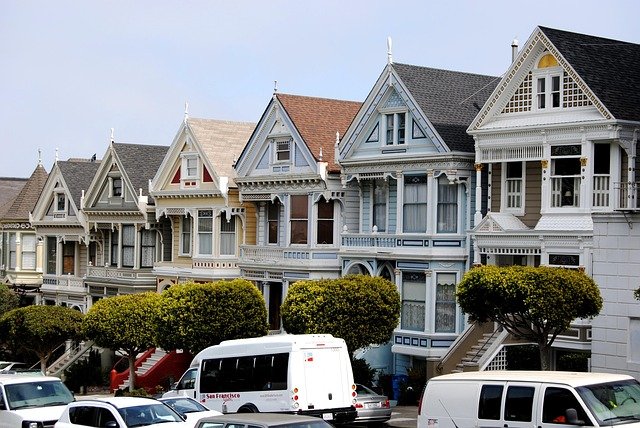
On September 10, 2026, San Francisco Mayor Daniel Lurie stood before reporters and did something few big-city mayors have done in recent memory: he declared a rent emergency. Median rents in the city had climbed 26% over the previous year, eviction notices were up 44%, and renters, who make up roughly two-thirds of the city’s population, were describing bidding wars for apartments that hadn’t existed since the dot-com era. The culprit wasn’t a housing shortage alone. It was money, and a lot of it, flowing from a handful of AI companies paying some of the highest salaries in American corporate history to employees who all wanted to live within biking distance of the office. What’s happening in San Francisco right now is a preview of a pattern that economists say could hit other AI-hub cities next, and it’s reshaping what “hot housing market” even means in 2026.
The Numbers Behind the Emergency
The scale of the shift is hard to overstate. According to CoStar data reported by CRE Daily, San Francisco’s average asking rent jumped 14% in just four months, from March to July 2026, reaching $3,864 in July, more than double the roughly $1,932 national average. Annual rent growth hit 15.3% by CoStar’s count, while Apartment List’s independent tracking put the year-over-year increase even higher, at 26%, with the median one-bedroom reaching $3,881 and the median two-bedroom hitting $4,599. In the Marina district, a studio that rented for $2,500 in early 2025 was going for $3,800 by mid-2026. A one-bedroom in Pacific Heights now runs $6,500 a month. Rob Warnock, lead economic researcher at Apartment List, pointed to the vacancy rate as the clearest sign of how tight things have gotten: it fell to 2.4% in mid-2026, down from 5.1% just two years earlier. CoStar’s own figures put it slightly higher at 3.6%, but either way, San Francisco now has less available rental housing than New York, whose vacancy rate sits at 2.9%. Apartments are leasing in as little as 18 days, compared with a 30-day national average, and leasing agents told CoStar that open houses are routinely drawing 40 to 50 prospective renters an hour.

Why AI Money Is Driving It
The rent spike traces directly back to a cluster of AI companies, Anthropic, OpenAI, and Cursor among them, that have concentrated engineering and research staff in San Francisco neighborhoods like SoMa, the Mission, and Hayes Valley. These firms are paying compensation packages that, combined with equity, routinely clear six figures for even mid-level roles, and some have reportedly offered housing stipends to make relocating easier. That income is landing in a city that has done almost nothing to expand its housing supply in response. Apartment List’s research found San Francisco issued just 705 apartment permits in 2024 and roughly 1,400 in 2025, working out to about 2 permits per 1,000 residents. Austin, by comparison, issued more than 15 permits per 1,000 residents over the same stretch. When a surge of high earners moves into a city that is still building at a fraction of the pace of Sun Belt metros, the math only resolves one way: existing renters get outbid, and prices climb across the board, not just in the luxury segment favored by tech workers.
City Hall’s Response
Lurie’s emergency declaration wasn’t symbolic. It came paired with concrete policy moves: a proposed 25% increase in the displacement payments landlords owe tenants evicted under the Ellis Act, and $3 million in new funding for the city’s Tenant Right to Counsel program, which provides free legal representation to renters facing eviction. “Rising rents are making it harder for the people who have built their lives here to stay here,” Lurie said, adding that the city needs more housing but that “a parent who got home last night to find an eviction notice on their door cannot wait for that housing to be built.” Meg Heisler, policy director at the Anti-Displacement Coalition, backed the urgency of the funding boost, telling reporters that “too many tenants are being forced out of their homes before cases even get to court.” Two members of the Board of Supervisors are pushing further: Jackie Fielder has proposed legislation limiting evictions for unpaid rent to amounts exceeding one month’s rent, while Danny Sauter is drafting a measure to cap rent increases on rent-controlled units at 10% annually, closing a loophole that currently lets landlords bank past increases or justify larger ones through capital improvement charges.
A Tale of Two Housing Markets
What makes San Francisco’s squeeze so striking is how far it diverges from the rest of the country. Realtor.com’s September 2026 housing report found that 20.8% of active U.S. listings nationwide had a price cut, the highest September reading since 2018, while total inventory climbed 5.4% year over year to 1,161,615 active listings, closing the gap to pre-pandemic supply levels to just 9.1%, the narrowest it’s been in years. Danielle Hale, Realtor.com’s chief economist, noted that “inventory is improving and more sellers are adjusting prices, yet the decline in pending sales makes clear that affordability remains a central constraint.” In other words, most of the country is cooling off and tilting toward buyers, while San Francisco is doing the opposite. That split matters beyond the Bay Area. The same AI companies driving San Francisco’s rent spike are also expanding offices in Austin, Seattle, Boston, and New York, and housing economists who track tech-sector hiring say those markets could see their own localized versions of this squeeze if hiring keeps accelerating. A national housing slowdown doesn’t mean every zip code is slowing down with it, and right now San Francisco is the clearest evidence of that.
What This Means for Renters and Homeowners Watching From Elsewhere
If you live in or near a city with a growing AI, biotech, or defense-tech employer base, San Francisco’s past twelve months are worth watching closely rather than dismissing as a one-city story. The pattern it’s established, a concentrated wave of high earners landing in a housing market that wasn’t built to absorb them, doesn’t require a city to be San Francisco specifically. It requires a major employer scaling up fast and a local permitting pipeline too slow to keep pace. For renters already in a hot tech-adjacent market, that means locking in a lease sooner rather than waiting for prices to level off, and checking whether your city or county has anything resembling San Francisco’s Tenant Right to Counsel program before a lease dispute turns into an eviction case. For homeowners in those same metros, it’s a reminder that a single industry’s hiring cycle can move your home’s value and your neighborhood’s rental rates more than any national headline about mortgage rates ever will. San Francisco didn’t get here because of a housing shortage that appeared overnight. It got here because income concentrated faster than supply could respond, and that’s a dynamic that travels wherever the next hiring surge lands.