
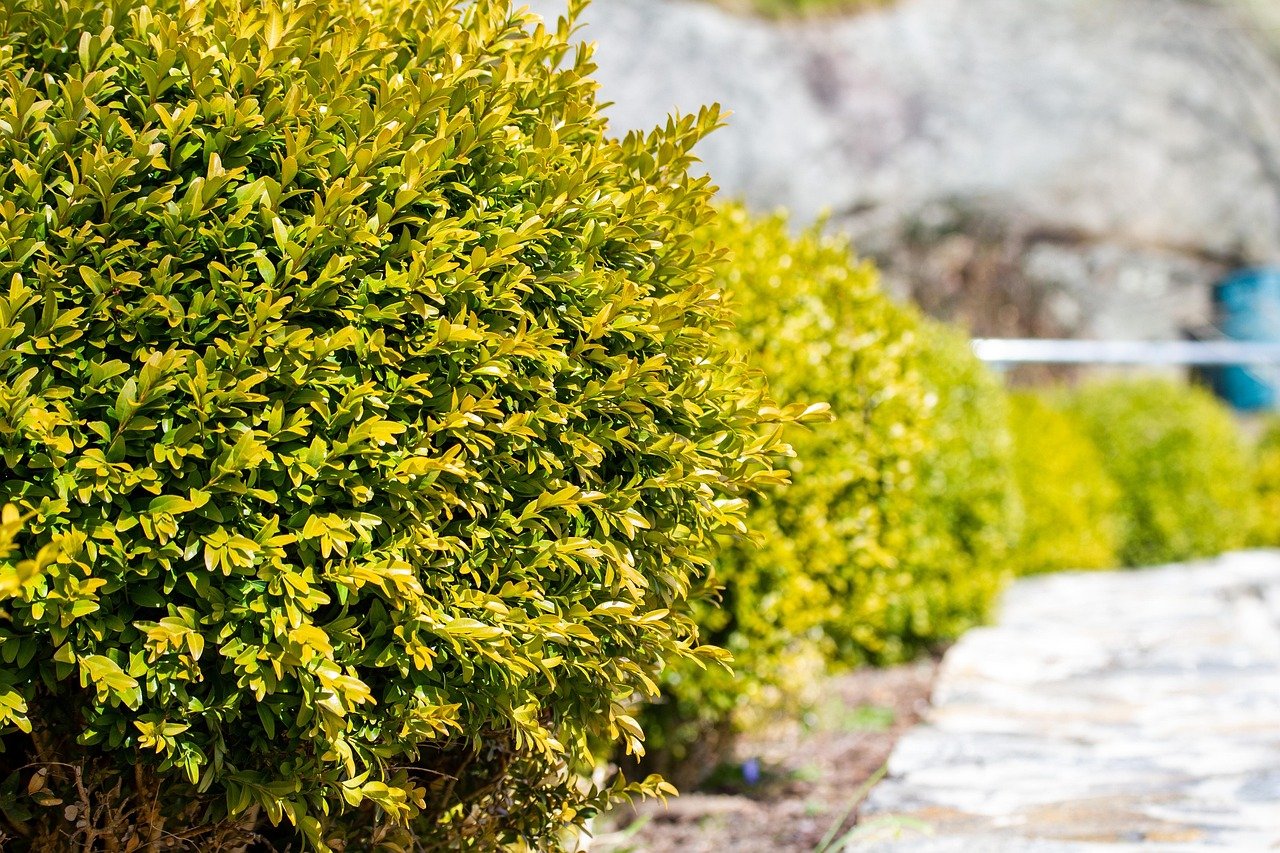
Two weeks ago I walked past the boxwood hedge that lines my neighbor’s front walk and did a double take. Half of it had gone from deep green to a sickly, see-through brown almost overnight, and when I got closer I noticed fine webbing tucked between the branches. My first thought was spiders. It wasn’t. As an Amazon Associate, I earn from qualifying purchases, and once I started digging into what was actually happening to that hedge, I realized I needed to check my own boxwoods immediately — because this particular pest has been moving through yards shockingly fast this year.
A Pest That Can Strip a Hedge in a Week
What’s chewing through boxwoods this fall is the box tree moth, an invasive caterpillar that arrived in North America a few years ago and has been accelerating its spread through 2026. Chris McKeown, owner of Bloomin Garden Center near Cincinnati, has been fielding a wave of panicked customers this season and describes just how fast the damage shows up. “It’s an insect that’s very, very invasive,” McKeown told WCPO Cincinnati, adding that a healthy-looking hedge can go downhill in almost no time at all — “this happened in like a week.” He also cleared up the confusion I’d had myself: “You see all this webbing and you might even think that your boxwood has been overrun by spiders, but it’s not, it’s their worms.”
One homeowner in the area, identified only as Elizabeth, described noticing the change the same way I did: “I discovered they were turning brown and had a lot of dead leaves.” That combination — sudden browning plus silk webbing — is becoming the calling card of this pest in yards across the country.
Where It’s Turning Up Right Now
This isn’t a slow-moving, someday-it-might-reach-you problem — it’s actively expanding county by county this growing season. Ohio’s Department of Agriculture placed six counties (Butler, Clermont, Hamilton, Warren, Greene, and Montgomery) under quarantine back in April 2026 after infestations took hold around Anderson Township, Loveland, and Blue Ash. Since then the pest hasn’t slowed down. According to University of Maryland Extension, “recent reports have confirmed the presence of box tree moth in Caroline, Cecil, and Queen Anne’s Counties” as of August 2026, bringing the total number of quarantined Maryland counties to eight, including Allegany, Frederick, Garrett, Washington, Cecil, Caroline, Kent, and Queen Anne’s. If you garden anywhere in the mid-Atlantic or Ohio Valley right now, there’s a real chance this pest is already in your zip code, even if it hasn’t reached your specific hedge yet.
How to Actually Identify It
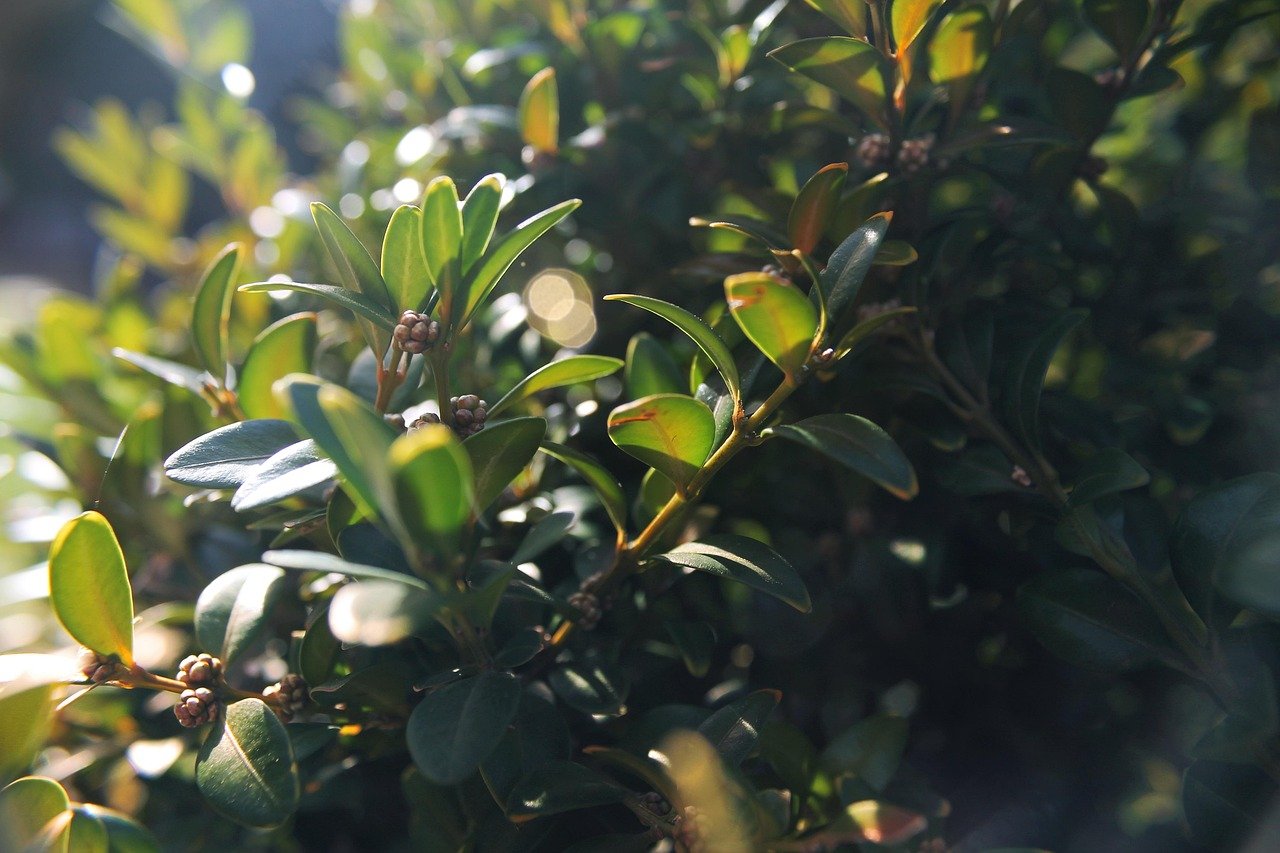
Before you panic-prune a perfectly healthy hedge, it’s worth knowing exactly what you’re looking for, because there are look-alike issues (boxwood blight, winter burn, leafminer) that get blamed on this moth too. UMD Extension describes the caterpillar as having “a black head capsule with a green and yellow body patterned with white, yellow, and black stripes and black spots.” The adult moths come in two forms — one mostly white with “bronze-brown wing margins and a small white marking,” and a plainer all-brown version — with wingspans of “40-45 mm (~1.5 inches).” Eggs are “pale yellow, flat-like, overlap, and usually laid in clusters of 5-20,” and the clearest early warning sign in the plant itself is the “wispy silk webbing” combined with “light green-brown frass pellets,” which is a polite way of saying caterpillar droppings tucked inside the foliage.
What Actually Works to Stop It
The good news is that boxwoods are surprisingly resilient if you catch this early. UMD Extension recommends confirming the identification first, then, for a light infestation, to “hand-pick or prune caterpillars off plants and place them in a bucket of soapy water” — genuinely one of the most effective options for a small hedge if you’re willing to spend twenty minutes with a flashlight. For anything beyond a handful of caterpillars, they suggest “horticultural oil or insecticidal soap spray on small caterpillars,” making sure to coat the undersides of the leaves where the caterpillars actually feed and hide. McKeown’s shop leans on stronger options for advanced infestations, recommending spinosad-based sprays as the most effective treatment, with a cheaper mite-control spray as a budget alternative, applied every few weeks through late fall and aimed inside the plant rather than just at the outer leaves. Extension experts do add one important caution, though: “unnecessary pesticide applications can negatively impact beneficial insects,” so it’s worth confirming you actually have box tree moth before you start spraying on a schedule.
If your hedge still has green leaves left, there’s real reason for optimism — plants that keep some foliage through the infestation can bounce back within three to six months once the caterpillars are dealt with. Severely skeletonized shrubs, on the other hand, may need to be cut back hard or removed entirely if the wood itself dies.
For anyone dealing with even a mild case, a few tools make the process much less miserable:
Shop insecticidal soap spray on Amazon
Shop spinosad garden spray on Amazon
Shop hand pruning shears on Amazon
Should You Just Replace Your Boxwoods?
It’s a fair question, especially if you’ve already lost a hedge to this pest once and don’t want to fight it every summer. McKeown’s team has started steering customers who are done gritting their teeth toward sturdier substitutes, with Bowling Ball Arborvitae coming up as a popular swap — it gives you a similar compact, rounded evergreen shape without being a buffet for this particular caterpillar. It’s not the only option; inkberry holly and dwarf yaupon holly are two other boxwood look-alikes extension offices have recommended in areas with heavy pressure. That said, nobody’s telling homeowners to rip out every boxwood in the yard on principle. If you catch an infestation early and treat it consistently, most hedges recover, and ripping out mature, well-established plants is a bigger project than most of us want to take on for a pest that responds to soapy water and a little vigilance.

Check Your Hedges This Weekend
The timing here matters. Late summer into fall is exactly when a second generation of caterpillars can still be feeding before cooler weather slows them down, which is part of why extension offices are pushing these alerts out right now instead of waiting until spring. A five-minute walk around your property with a flashlight, checking for webbing and frass tucked in the center of the plant, costs nothing and can save you a hedge that took a decade to grow in.

I ended up going straight from my neighbor’s ruined hedge to my own backyard that same afternoon, flashlight in hand, half expecting the worst. Mine turned out clean, at least for now, but I’ve started checking every couple of weeks instead of assuming boxwoods are the low-maintenance plant they’ve always been marketed as. That’s really the shift this pest is forcing on all of us: the “plant it and forget it” era of boxwood hedges is over, at least until this moth’s spread slows down, and a little regular attention is a lot cheaper than replacing a hedge that took years to fill in.