I’ll be honest: the last time I helped set up a nursery, everyone was still doing gray-and-white “gender neutral” rooms with a single wall of vinyl decals shaped like clouds. Scrolling through nursery inspiration this year, it’s clear that formula is officially retired. The rooms designers are building for 2026 look less like a baby department showroom and more like a genuinely beautiful, lived-in corner of the house — one that happens to have a crib in it. I dug into what working nursery and children’s-room designers are actually specifying for clients right now, and pulled together the eight shifts that keep showing up. A quick disclosure before we dive in: a few of the product links below go to Amazon, and if you shop through them, Every Corner may earn a small commission at no extra cost to you — it’s how we keep researching rooms like this one.
1. The Nursery as a Sanctuary, Not a Showroom
The biggest shift for 2026 isn’t a color or a pattern — it’s the whole premise of the room. Alex Spielman, founder of the nursery-design studio The Little Things, told The Bump that “we’re seeing parents prioritize warmth and calm in nursery design, whether that comes through color, texture or material choices,” adding that “parents want the nursery to feel like a sanctuary — a room that brings a sense of ease” (The Bump). Interior designer and sensory-design specialist Helen Plehn echoed that shift, noting that “baby nurseries are evolving into intentional sanctuaries that reflect both science and spirit,” and that “nurseries are becoming spaces for co-regulation, not just for babies but for parents too” (The Bump). In practice, that means softer overhead lighting, fewer visual triggers, and a room designed to calm the adult rocking the chair at 3 a.m. as much as the baby in it.
2. Layered, Dimmable Lighting Over a Single Overhead Fixture
Following directly from that sanctuary mindset, flat overhead light is out. Designers are layering a dimmable ceiling fixture with a warm-toned table or floor lamp near the glider, plus a plug-in night light for diaper changes that won’t fully wake anyone up. The goal is a room that can go from soft and golden at bedtime to bright enough for daytime play, without a single switch doing all the work. It’s a small, inexpensive change that does more for the “sanctuary” feeling than almost any other upgrade on this list.
3. Bolder Color and Pattern Replace the All-Neutral Palette
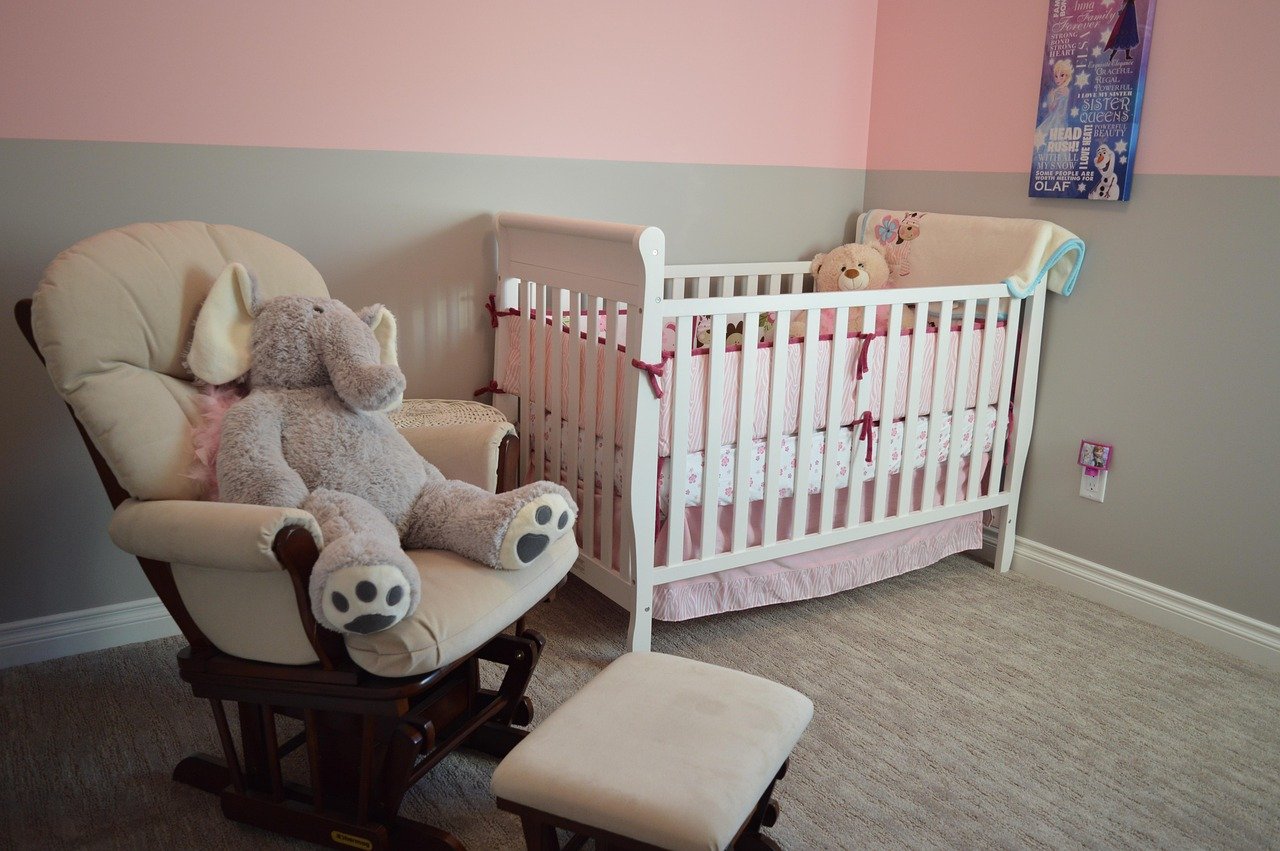
For years, “safe” meant beige, greige, or the palest possible blue or pink. That’s fading fast. Emilie Schiller, owner and principal designer at Home Methods, told The Bump that “I think we’re going to move away from neutral nurseries and start to see bolder spaces” (The Bump). Tenlie Mourning made a similar point to Nestig, describing 2026 palettes as “more muted and sophisticated, with a significant increase in texture and pattern” built around earthy tones like terracotta, sage, and ochre rather than pastel-baby colors (Nestig). The look is closer to a well-edited adult living room than a baby-store display — which is exactly the point.
4. Illustrative, Mural-Style Wallpaper
Wallpaper isn’t going anywhere in 2026, but the style has matured. Mourning notes that “wallpaper is moving toward illustrative styles that feel timeless rather than tied to a specific character or trend,” with hand-painted, artisan-made details becoming a real focal point (Nestig). Think botanical or landscape murals, not licensed cartoon characters — the kind of wallcovering that can quietly transition from nursery to big-kid room without a full redo. A peel-and-stick mural on a single accent wall is the easiest way to try the look without committing to paste and a steamer later.
5. Dramatic, Layered Textiles
Designers are also leaning harder into fabric as a design tool rather than an afterthought. Mourning calls “dramatic textiles” essential for “anchoring rooms in pattern and color while bringing warmth,” and Maggie Richmond of Maggie Richmond Design says she’s “been doing a lot of layering when it comes to window treatments and rugs,” treating blackout curtains as a design opportunity rather than a purely functional necessity (Nestig). In real rooms, that looks like a patterned wool or wool-blend rug, trimmed blackout curtains in a heavier weave, and a quilted throw folded over the glider — three or four textures doing what a single crisp white crib sheet used to do alone.
6. Built-In, Architectural Storage
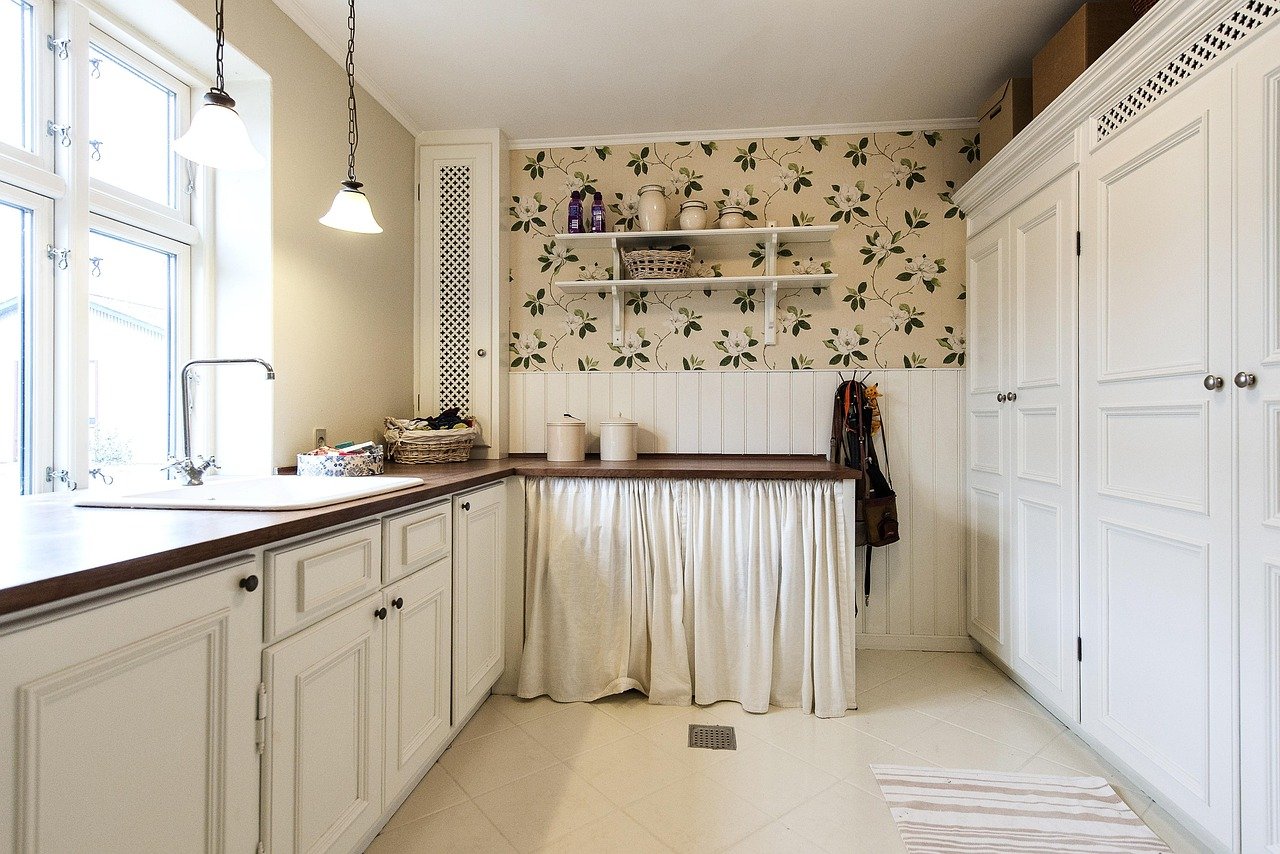
Instead of a freestanding dresser plus a closet organizer plus a bookshelf competing for wall space, designers are pushing storage into the architecture itself. Mourning explains that “we’re building storage into the walls and into the architecture of the rooms themselves to achieve a cleaner look,” mixing open shelving for display with closed cabinetry for the less photogenic gear (Nestig). If a full built-in isn’t in the budget, the same effect comes from floating shelves paired with matching woven storage baskets that hide the clutter while keeping the wall feeling intentional rather than crowded.
7. Rounded, Sculptural Furniture
The hard-edged, boxy nursery furniture of the last decade is softening into curved silhouettes — rounded crib rails, arched changing tables, and organic-shaped bookcases that read more like sculpture than equipment. Nursery Design Studio’s 2026 trend report points to exactly this shift toward sculptural, curved forms as one of the year’s defining looks, often paired with warm metal hardware like antique brass or champagne bronze on drawer pulls and light fixtures (Nursery Design Studio). A convertible crib with rounded rails and a set of brass hardware swapped onto an existing dresser are both easy ways to bring that softer, warmer edge into a room without buying everything new.
8. Real-Life Durability Over Precious Perfection
All that softness still has to survive spit-up, marker, and a toddler climbing the bookshelf. Spielman was blunt about it with The Bump: “we’re seeing parents think much more intentionally about how their homes support daily life,” which in practice means washable textiles, scrubbable paint finishes, and furniture chosen to grow with the child rather than get replaced at eighteen months (The Bump). Schiller adds that a recurring conversation with clients is “how the child can grow into the space we are creating,” which is why so many 2026 nurseries lean on a timeless, adaptable foundation — a natural wood crib that converts to a toddler bed, a neutral rug that can take a beating — and save the trend-driven color and pattern for the layers that are cheap and easy to swap out later, like bedding, art, and curtains.
Put together, the 2026 nursery isn’t chasing a theme so much as building a genuinely calm, well-made room that happens to start with a crib in it — one that can keep its bones through toddlerhood and beyond. Start with the lighting and textiles if you’re working with a smaller budget; save the built-ins and furniture swaps for when you’re ready to commit.