
My sewing machine lived on the dining table for almost two years. Every Thanksgiving, every dinner party, every ordinary Tuesday, I’d clear a path through half-finished quilt blocks and a tangle of thread spools before anyone could sit down. It wasn’t until my neighbor turned her spare bedroom into an actual, dedicated craft room, complete with a cutting table that stayed set up all the time, that I realized how much of my own “I don’t have time to sew” was really just “I don’t have a surface that stays clear.” As an Amazon Associate, I earn from qualifying purchases, and once I started researching what designers who specialize in these rooms actually recommend, I ended up buying my way through most of this list. Interior designers and organizers who work on hobby and craft spaces told me the same thing over and over: the room doesn’t fail because of bad taste, it fails because of bad storage and a surface nobody protected. Here are eight upgrades that turned my own leftover corner into a room I actually use.
1. A Dedicated Work Surface That Can Take a Beating
Most hobby rooms get planned around how they should look before anyone thinks about what’s actually going to happen on the table. Janelle Patton, principal designer and owner of Lark Interiors in Dallas, puts it bluntly: “For hobbies involving paint, soil or other materials that can get messy, I’d choose something durable and easy to clean.” That’s a different standard than picking furniture for a living room, where you’re optimizing for how a surface photographs, not how it holds up to glue guns, resin, or a rotary cutter dragged across it a hundred times a week.
A dedicated cutting and craft table with a self-healing surface solves the two biggest complaints in every hobby room story I read: nowhere to leave a project mid-stitch, and a tabletop that shows every scratch within a month.
Shop craft cutting tables with built-in storage on Amazon
2. Vertical Pegboard Storage That Clears the Desk
Jennifer Johnson, owner of Closets by Design Palm Beaches & Treasure Coast, sees the same mistake across nearly every project: too much sitting on the work surface instead of the wall. “Wall-mounted hooks, like a slat wall or pegboard with utility hooks, help keep items off the desk,” she explains, warning that cramming too many features and too much storage into one small space is what makes a room feel overcrowded and messy rather than functional.
A pegboard wall turns scissors, rulers, paintbrushes, and ribbon spools into something you can see at a glance instead of digging through a drawer for. It also scales with whatever hobby comes next, since the hooks and shelves rearrange instead of locking you into one layout.
Find pegboard organizer kits for craft rooms on Amazon
3. Closed Storage Cabinets for the Overflow
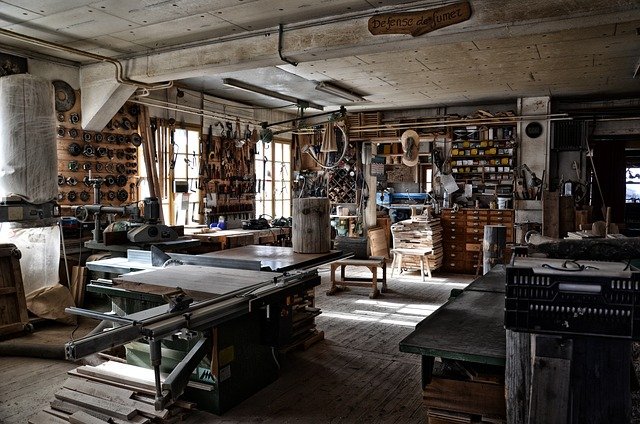
Open shelving looks appealing in photos, but Patton is direct about where most hobby rooms actually succeed or fail: “Storage is where most hobby rooms succeed or fail. My advice is to plan for more than you think you need because you will need it!” That’s a lesson most people learn the hard way, buying one small cart and discovering six months later that fabric, yarn, or scrapbooking paper has expanded to fill every flat surface in the room.
Closed cabinets do double duty: they hide the visual clutter of mismatched supply packaging, and they protect fabric, paper, and paint from dust and sun fading, which matters more than people expect in a room that often gets used only a few hours a week.
Shop craft storage cabinets with doors on Amazon
4. Clear, Color-Coded Bins for the Small Stuff
It’s the small supplies, beads, buttons, embroidery floss, washi tape, that sink a hobby room, not the big furniture. Organizing advice for these spaces consistently points to cubbies and bins sorted by color or category rather than one giant catch-all drawer, because a system you can see through at a glance is one you’ll actually put things back into.
Clear stackable bins let you spot what’s running low without opening five containers first, and labeling by project or supply type keeps a shared family craft room from turning into a free-for-all. This is one of the cheapest upgrades on this list and often the one that makes the biggest daily difference.
See clear stackable craft storage bins on Amazon
5. Daylight-Balanced Task Lighting
Light is the piece people plan last and need most. Erica Flynn, window expert and executive creative director for Graber, says the first question should never be about furniture at all: “Before thinking about furniture or finishes, think about how you’ll actually use the room.” For hobbies that depend on accurate color, painting, sewing, scrapbooking, cheap overhead lighting throws everything off, making a fabric swatch or a paint mix look completely different once it leaves the room.
A daylight-balanced LED task lamp clipped or mounted right over the work surface corrects for that, giving a true read on color without waiting for a sunny afternoon to double-check a project.
Shop daylight LED craft lamps on Amazon
6. Motorized or Cordless Shades for Light Control
Flynn’s advice doesn’t stop at adding light, it extends to managing the light that’s already coming in. “Natural light can make a hobby room more enjoyable and productive, but the goal isn’t simply to maximize sunlight; it’s to manage it well,” she notes. Too much direct sun glares off a laptop screen during digital crafting, fades fabric stored near a window, and makes it nearly impossible to judge paint color accurately in the afternoon.
Cordless cellular shades let you dial sunlight up or down through the day without a cord snagging on a sewing machine or a pottery wheel nearby, and a blackout option is worth it for anyone doing photography, resin curing, or screen-based hobbies where glare is the enemy.
Browse cordless cellular blackout shades on Amazon
7. A Rolling Cart for Rooms That Do Double Duty
Not everyone gets a room that’s just for hobbies. Marsha Todd of Sailer Design, who fields frequent requests for dedicated potting rooms, and Melissa Robinson, director at MW Architects, both point to the same shift: more people are turning spare space into working hobby rooms, in some cases because, as Robinson puts it, “a lot of people are looking at income from other sources and have little craft projects” they’re trying to grow into something more. When a guest room, office, or garage corner has to serve two purposes, storage needs to roll away completely, not just get pushed aside.
A rolling multi-drawer craft cart holds an entire hobby’s worth of supplies and tucks into a closet or against a wall the moment the room needs to go back to being a guest room or office.
Find rolling craft storage carts on Amazon

8. Sound Separation for Rooms That Need Quiet
Not every hobby is silent, and not every household wants to hear it. Maia Lemlij of XUL Architecture has noticed the same pattern in client requests: “We’ve definitely seen an increase in specialist room requests,” she says, adding that many of these rooms get tucked into garden buildings or basements specifically “to help promote social distance” from the rest of the house. Tim Robinson, architect at Sonn Studio, frames the appeal in similar terms: “Being able to walk away from the house gives you the physical and mental separation that is needed,” whether the hobby is woodworking, a sewing machine running late at night, or practicing an instrument.
You don’t need a full architectural addition to get some of that separation. A door-gap soundproofing kit and a few acoustic panels cut down on noise bleeding into the rest of the house, which is often the difference between a hobby room that gets used after the kids are asleep and one that doesn’t.
Shop door soundproofing kits and acoustic panels on Amazon
Claim the Room Before You Decorate It
My own fix ended up being smaller than my neighbor’s full guest-room conversion: a 6-foot folding table that lives permanently against one wall of a spare corner, a pegboard above it, and three clear bins that finally got my fabric off the dining table for good. I still don’t have a door I can close, but Tim Robinson’s point about separation stuck with me, so the next upgrade on my own list is a cheap folding screen to at least visually wall the space off when company comes over. If you’re staring at a dining table covered in supplies right now, the lesson from every designer I talked to is the same: don’t wait for the perfect room to show up. Clear one table, hang one pegboard, and plan storage for more than you think you’ll need, because you will.