As an Amazon Associate, I earn from qualifying purchases.
For the last few years, “organized” has meant visible. Color-coded bins on open shelves, labeled jars lined up on the counter, a pantry photographed like a showroom. It looked satisfying on a screen, but living with it was another story — a lot of upkeep for a look that was, honestly, kind of loud.
This year, something quieter is taking over. Professional organizers are talking less about which bin to buy and more about where storage should disappear to entirely — inside a bench, under a bed, behind a door — so a room can just look like a room again, not a system on display. Labels are shrinking too, when they show up at all. I started noticing this shift while researching furniture for a small guest room, and once you know to look for it, it’s everywhere in current design coverage. Here’s what “quiet storage” actually means, why it’s catching on now, and how to bring a version of it into a home that isn’t getting gutted and redone.
What “Quiet Storage” Actually Means
Quiet storage isn’t a product category — it’s a design instinct. Instead of solving clutter by buying a matching set of containers and putting them on display, the goal is to give things a home that isn’t visible at all. A bench that opens to hold blankets. A coffee table with a lift-top for remotes and chargers. Stairs with drawers built into the risers. The storage is doing real work, but the room doesn’t announce it.
Di Ter Avest, a professional organizer and founder of Diisorganized, put it plainly in a recent roundup of hidden storage ideas for Homes & Gardens: “If there’s one thing that houses never seem to have enough of, it’s storage space, or more specifically, hidden storage space which doesn’t take over your home and affect the ambiance.” That’s the whole idea in one line — the storage exists to serve the room, not the other way around.
It’s a meaningful shift from the aesthetic-organizing era, where the container was often the point. Quiet storage flips that: the furniture is the container, and it was never trying to look like one in the first place.
Why the “Look at My Pantry” Era Is Losing Steam
Part of this is fatigue. Decanting everything into matching canisters takes real time to maintain, and it doesn’t hold up once real life — a hectic week, a grocery restock, a kid grabbing snacks — hits the system. But part of it is also a straightforward style correction. Marissa Hagemeyer, an organizer with NEAT Method, told Yahoo Shopping that labeling itself is getting a quieter update for 2026: “Labels will always be an important part of an organized system, but current trends are leaning away from highly visible, oversized labels towards smaller options.” She added that the goal isn’t to drop function for looks, but to stop treating them as opposites: “Style will still have a role in organization, but not at the expense of a space that actually works.”
That’s a useful filter for anyone updating a space this year. A small label tucked on the inside lip of a bin still helps you find the batteries. A giant vinyl label spelling out “SNACKS” across the front of a basket on your open shelving is doing more for the camera than for your kitchen.
Furniture That’s Quietly Doing Double Duty
The clearest expression of this trend is furniture shopping with a second job in mind. It’s not a new idea — storage ottomans have existed forever — but it’s being chosen more deliberately now, as a real strategy rather than a dorm-room stopgap. In that same Homes & Gardens piece, Ter Avest ran through the pieces worth prioritizing: underbed storage for off-season items, coffee tables with hidden lids, storage ottomans, built-in banquette seating with drawers underneath, behind-the-door organizers, and even stair drawers in homes with the right layout.
What ties these together is that none of them require a renovation. A storage ottoman swaps in for a regular one. A rolling underbed storage bin slides under a bed frame that’s already there. A lift-top coffee table replaces whatever’s currently doing that job. Livingetc’s 2026 trend coverage echoed the same point, quoting organizer Di Ter Avest on why this approach works so well in a bedroom specifically: “Furniture with discreet storage, like bench seats or under-bed bins, is a great way to organize your bedroom.” It’s a low-disruption upgrade — you’re not adding a system, you’re replacing a piece you already needed with one that works harder.
The New Rules for Labels
If you keep a labeling system, quiet storage doesn’t mean abandoning it — it means scaling it down. A few adjustments make a labeled system feel calmer without losing its usefulness:
- Go small and low-contrast. A narrow label in a neutral tone on the inside edge of a lid does the job without becoming the focal point of the shelf.
- Label the container, not the room. A closed bin can carry a tag on its underside or a discreet corner tab, since you’ll pull it out to check anyway.
- Save bold labels for genuinely shared, high-traffic spots — a family entry cabinet or a shared linen closet — where a quick glance actually saves an argument.
- Handwritten beats printed vinyl for anything in a lived-in space like a bedroom or living room; it reads as a note to yourself, not signage.
A compact mini label maker that prints small, plain tape is a better fit for this approach than a bold sticker sheet — it nudges you toward restraint by default.
Room by Room: Where to Start
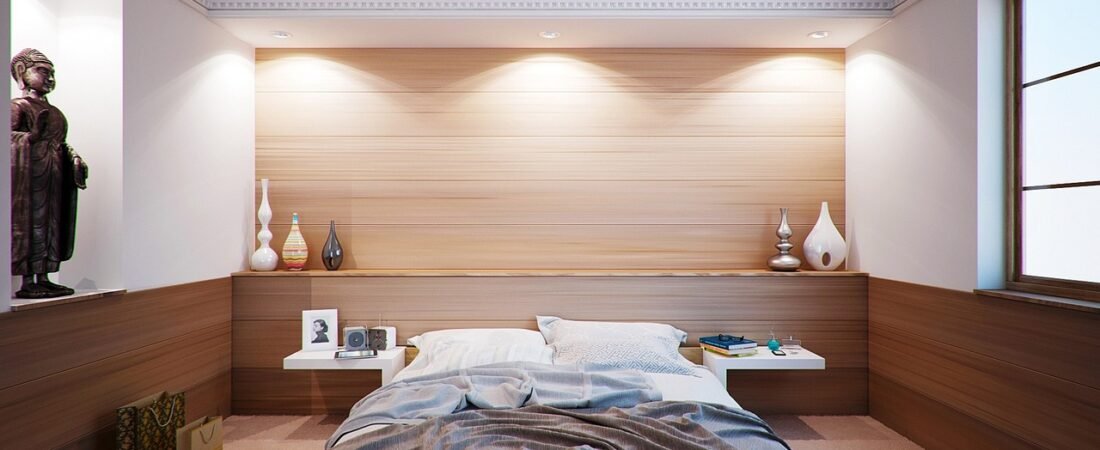
Bedroom. This is the easiest room to convert first, since bedding, off-season clothes, and extra pillows are the classic candidates for out-of-sight storage. An underbed bin or a storage bench at the foot of the bed can absorb a surprising amount without a single visible container.
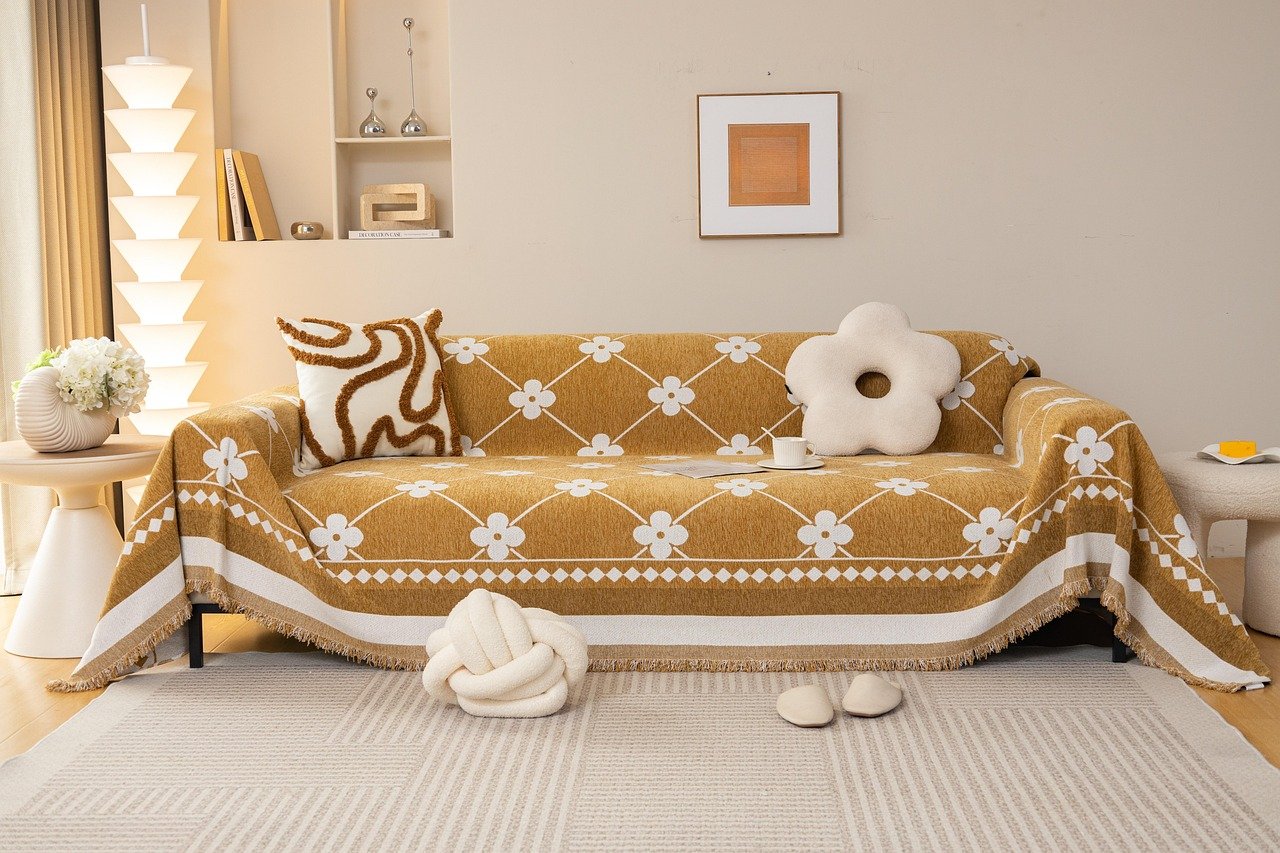
Living room. Remotes, cables, coasters, and the odds and ends that pile up on a coffee table are prime candidates for a lift-top table or an ottoman with a lid. This is also where “quiet” pays off the most visually, since it’s the room guests actually sit in.
Entryway. A bench with storage underneath handles shoes and bags without needing open cubbies on display. If your entry is small, even a slim bench against one wall does more than a row of hooks alone.
Kitchen. Not every kitchen needs a pantry teardown to benefit from this. Deep drawers with dividers, a pull-out base cabinet organizer, or a simple cabinet door rack can absorb the small appliances and gadgets that otherwise clutter the counter — all without a single label in sight.

It’s Also a Small-Space and Rental Strategy
Quiet storage happens to solve two problems at once for anyone in an apartment or a rental. First, most of these pieces are freestanding furniture, not built-ins, so they move with you and need zero permission from a landlord. Second, a small space genuinely benefits more from furniture that hides its function than from open shelving that has to stay perfectly styled to avoid looking cluttered — in 400 square feet, a messy open shelf is far more visible than it would be in a bigger room.
This is also where the trend connects to a bigger shift in how organizers are talking about storage generally: not as a onetime purge-and-bin project, but as ongoing infrastructure you build into a home over time. That framing is showing up across 2026 coverage — organizer Arabella Drake described it to Livingetc as something “increasingly being treated as infrastructure, not a one-off tidy-up.” Furniture that hides its own storage is an easy, durable piece of that infrastructure, since you’re not maintaining a system — the piece just keeps doing its job.
What This Doesn’t Mean
Quiet storage isn’t a rejection of organizing itself, and it isn’t a return to junk drawers and stuffed closets. The difference is where the effort goes. Instead of spending a weekend decanting cereal into matching canisters, the effort goes into choosing furniture and layouts that don’t require constant restyling to look “organized.” It’s less photogenic in the moment, but it holds up better on a random Tuesday, which is really the only test that matters.
The Bottom Line
The most telling thing about quiet storage is that it isn’t really a new product to buy — it’s a different question to ask before you buy anything. Instead of “what container should I put this in,” it’s “what piece of furniture could just hold this instead.” A bench, an ottoman, a bed frame, a stair riser. If 2026’s organizing trends have a common thread, it’s a quiet correction: storage that serves the room, rather than a room staged to show off its storage. That’s a trend worth keeping around well past this year.