My neighbor Jill spent an entire Saturday building the pantry of her Pinterest dreams: matching canisters, chalkboard labels, everything decanted into identical bins with snap-tight lids. It looked gorgeous for exactly nine days. Then a case of granola bars showed up from Costco, a lid went missing, and by week three the shelves looked worse than before she started. When she mentioned this to a professional organizer at a dinner party, the response surprised her: you built a system for a brain that isn’t yours. Jill has ADHD, and closing lids, matching containers, and remembering where the label maker lives were never going to be sustainable for her, no matter how good the system looked in photos. That conversation sent her down a rabbit hole, and it turns out she’s part of a much bigger shift. As more adults get diagnosed with ADHD and professional organizers report a steady stream of new clients asking for systems that work with their brains instead of against them, 2026 is turning into the year home organizing stops chasing perfect and starts chasing functional. Full disclosure before we get into it: As an Amazon Associate, Every Corner earns from qualifying purchases made through the Amazon links below, at no extra cost to you, should any of the tools mentioned below end up on your own shelves.
What “ADHD-Friendly” Actually Means for Your Home
The term gets thrown around loosely, but the core idea is simple: build storage around how you actually behave, not how you wish you behaved. That means fewer steps between item in hand and item put away, fewer decisions required to keep a space tidy, and zero shame when the system slips for a week. Professional organizing firms are leaning into this hard. The team at HeartWork Organizing, a Chicago-based professional organizing company, noted in their 2026 trends roundup that requests tied to ADHD have become one of their most consistent categories of new business, with clients telling them flatly that the problem was never knowing what to do, it was building a system they could actually keep doing.
This isn’t a niche corner of the organizing world anymore. It’s bleeding into mainstream advice from outlets that used to publish nothing but color-coded bin roundups, which tells you something about where the industry is headed in 2026.
The “Move Through the House” Method Replacing Room-by-Room Cleaning
Homes & Gardens’ editorial team tested a handful of new organizing approaches this year, and one built specifically around ADHD brains stood out: the Sunday Butterfly Method, created by the site’s kitchen editor Lydia Hayman. Instead of committing to one room until it’s finished, you move through the entire house like a butterfly moving between flowers, tackling whatever small task catches your eye and stopping the moment your attention does.
Dan Fauzi, the site’s home tech editor who has suspected ADHD, described why it worked for him better than a traditional room-by-room checklist: “I can simply move through my house, spot tasks that need doing, and get them done then and there.” Paired with music or a podcast, the method turns tidying into a loop you can step in and out of rather than a project you have to finish in one sitting or count as a failure.
Open, Visible Storage Is Winning Over Closed Bins
For years, the aspirational look was uniform bins with lids, everything hidden behind a matching front. That’s now colliding with a very practical problem: if you can’t see it, you forget it exists, and if a lid stands between you and the item, the item ends up on the counter instead. Organizers working with ADHD clients are shifting toward open bins, clear plastic, and shallow containers you can scan at a glance, especially in kitchens, playrooms, and closets where items get used daily.
This matters because the whole point of the system is removing friction, not adding a decorative layer that has to be maintained. A lidless, see-through bin means putting something away takes one motion instead of three, and finding it later takes a glance instead of a search. If your current bins all have snap-on lids, swapping just the high-traffic ones for open, stackable versions is one of the lowest-effort upgrades you can make this fall. These clear stackable open storage bins are a good starting point for a shelf that gets touched every day, since there’s nothing to flip open, snap shut, or lose track of.

Labels You’ll Actually Keep Using
Marissa Hagemeyer of the professional organizing franchise NEAT Method told Yahoo Shopping that labels remain one of the most important parts of any organized system heading into 2026, but the trend among organizers is toward labels that are quick to make and quick to change, not permanent vinyl that locks a bin into one category forever. A drawer that holds kids’ art supplies this month might hold winter gloves by December, and a system that requires a label maker and a trip to find it discourages you from ever updating it.
Painter’s tape and a marker, chalkboard-style tags, or reusable dry-erase labels solve this instantly. The goal is a label you can change in ten seconds standing at the shelf, not a project you’ll put off for three weeks. A roll of reusable dry-erase labels keeps a pen clipped nearby so relabeling a bin takes as little effort as writing a grocery list.
One-Step Systems Are the Rule Pros Are Designing Around
Arabella Drake, co-founder of the organizing firm Ankersen Drake Home Organisation, told Livingetc that homes are increasingly being organized around daily rhythms rather than tidy categories. “We design systems around things like morning routines, workout regimes, travel prep, or hosting,” she said. In practice, that means a system built around what you actually do each morning, not what a storage catalog says a mudroom should contain.
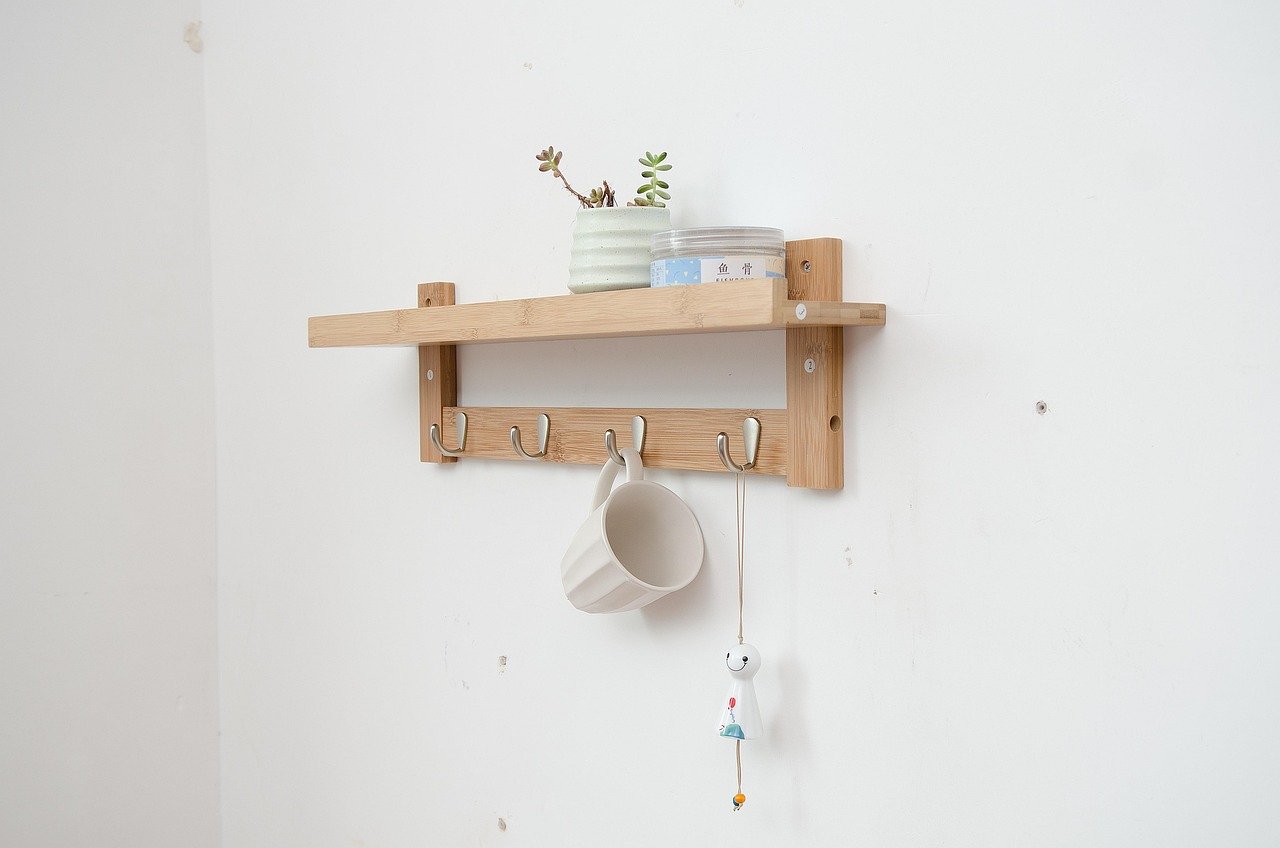
For a household with ADHD, the practical version of this is ruthless: anything that requires two hands, a hook you have to aim for, or a bin buried behind another bin gets abandoned within a week. Open hooks at eye level, positioned exactly where you drop things anyway rather than where they’d look tidiest, remove the aiming problem entirely. A row of over-the-door hooks near wherever coats and bags actually land, not necessarily the official coat closet, turns “put it away” into a single motion instead of a multi-step decision.
A Landing Zone With Zero Decisions Required
Every organizer interviewed for this piece, in one way or another, circled back to the same idea: the fewer decisions a system demands in the moment, the longer it lasts. A catch-all spot by the door, one basket, no sorting required, beats a beautifully zoned entryway with five separate labeled trays that all look identical after a long day. You’re not being lazy by using one big basket instead of a sorted system; you’re removing the exact decision point where most organizing systems quietly die.
A single large woven catch-all basket by the door works as the entry-level version of this idea: everything goes in, nothing needs to be pre-sorted, and you can do a two-minute sweep to redistribute contents once a week instead of getting every item to its final home the moment you walk in.
Organizing for Two Different Brains Under One Roof
HeartWork Organizing also flagged a shift in who’s booking their services: more men are initiating the call to organize a home for and with a partner, often because one person in the household thinks in categories and the other thinks in piles, and neither approach is wrong. The 2026 version of couples organizing isn’t about forcing one partner’s system onto the other. It’s building two compatible zones, a closed, labeled system for the partner who wants it, and an open, visible one for the partner who needs to see everything to remember it exists.
That might mean a linen closet with folded stacks on one side and a loose basket on the other, or a garage workbench with drawers for one person and open pegboard for the other. The system succeeds when both people can maintain their half without translating it through the other person’s brain first.
When It Makes Sense to Call in a Professional
Di Ter Avest, a professional organizer and owner of Di Is Organized, told Livingetc that clients increasingly frame organizing as a wellbeing project rather than a tidiness chore: “People are treating organization as more than just tidying up, it’s a way to reduce stress and support overall wellbeing.” That reframing matters for anyone who has felt embarrassed calling for help with something that sounds, on paper, like just putting things away.
If you’ve bought bins, watched videos, and tried three different label systems and still find yourself back at square one, that’s not a personal failure, it’s usually a sign the system was designed for the wrong brain. A single session with an organizer who specializes in ADHD-friendly setups can often diagnose in an hour what months of solo trial and error couldn’t.
The Bottom Line for Fall 2026
None of this requires a full home renovation or a weekend of decanting. Swap a few lidded bins for open ones in the spots you touch daily, put a pen next to a roll of relabelable tags, and move your hooks to where things actually land instead of where they’re supposed to go. Jill’s pantry, for what it’s worth, now has open bins with masking-tape labels she rewrites every few weeks. It’s less photogenic than her original setup, and it’s the first system that’s still standing eight months later.