
Every weekday morning looks the same at my front door: one shoe is missing, my keys have slid under a stack of mail, and my kid is holding a permission slip that needed to be signed three days ago. None of this happens because I own too little storage — it happens because nothing by my door has a job. Organizers and design editors have started calling this fix an entryway “drop zone” or “landing strip”: a single, deliberately built command center right inside the door where keys, shoes, bags, and outgoing mail each get one home instead of drifting through the house. It’s a shift away from stuffing an overflow closet with more bins and toward what Apartment Therapy and Livingetc are both flagging as a defining 2026 organizing move — systems built around your actual daily routine, not generic categories. As an Amazon Associate, I earn from qualifying purchases. Every product below is something I’d actually put by my own door, not just something that photographs well.
Interior stylist Arabella Drake, discussing where home organizing is headed this year, put it simply: it’s “less about owning as little as possible and more about owning and organizing with purpose.” A drop zone is that idea in its most literal form — you’re not decluttering the entryway, you’re giving every object that passes through it an assigned spot. Below are seven pieces that build a real landing strip, in the order I’d actually install them, starting with the wall and working down to the floor.
1. Wall-Mounted Entryway Organizer
Most entryway clutter isn’t really clutter — it’s just homeless. Keys, mail, umbrellas, and the dog’s leash all need somewhere to land the second you walk in, and a bare wall by the door does nothing to help. A wall-mounted organizer that combines hooks, a small shelf, and sometimes a mail slot turns that dead wall into the actual landing strip designers keep pointing to: one glance tells you what’s missing before you leave the house. It also keeps the floor and any nearby console clear, which matters more in smaller entryways where there’s no room for a full closet. Mount it at a height everyone in the house can reach, including kids, so the system doesn’t collapse the first busy morning.
→ Shop Wall-Mounted Entryway Organizer on Amazon: View on Amazon →
2. Shoe Storage Bench with Cubbies
Shoes are usually the first thing to pile up at a front door, and the reason isn’t laziness — it’s that most homes don’t have a spot low enough and close enough to the door to make putting them away easier than kicking them off. A storage bench with open cubbies solves both problems at once: it gives every pair a designated slot at floor level, right where shoes come off, and the bench top doubles as somewhere to sit while you tie laces or pull on boots. Open cubbies also make the system kid-proof, since there’s no bin lid or drawer to skip. For households of four or more, look for a bench with at least six to eight individual slots so the system doesn’t run out of room by Tuesday.
→ Shop Shoe Storage Bench with Cubbies on Amazon: View on Amazon →
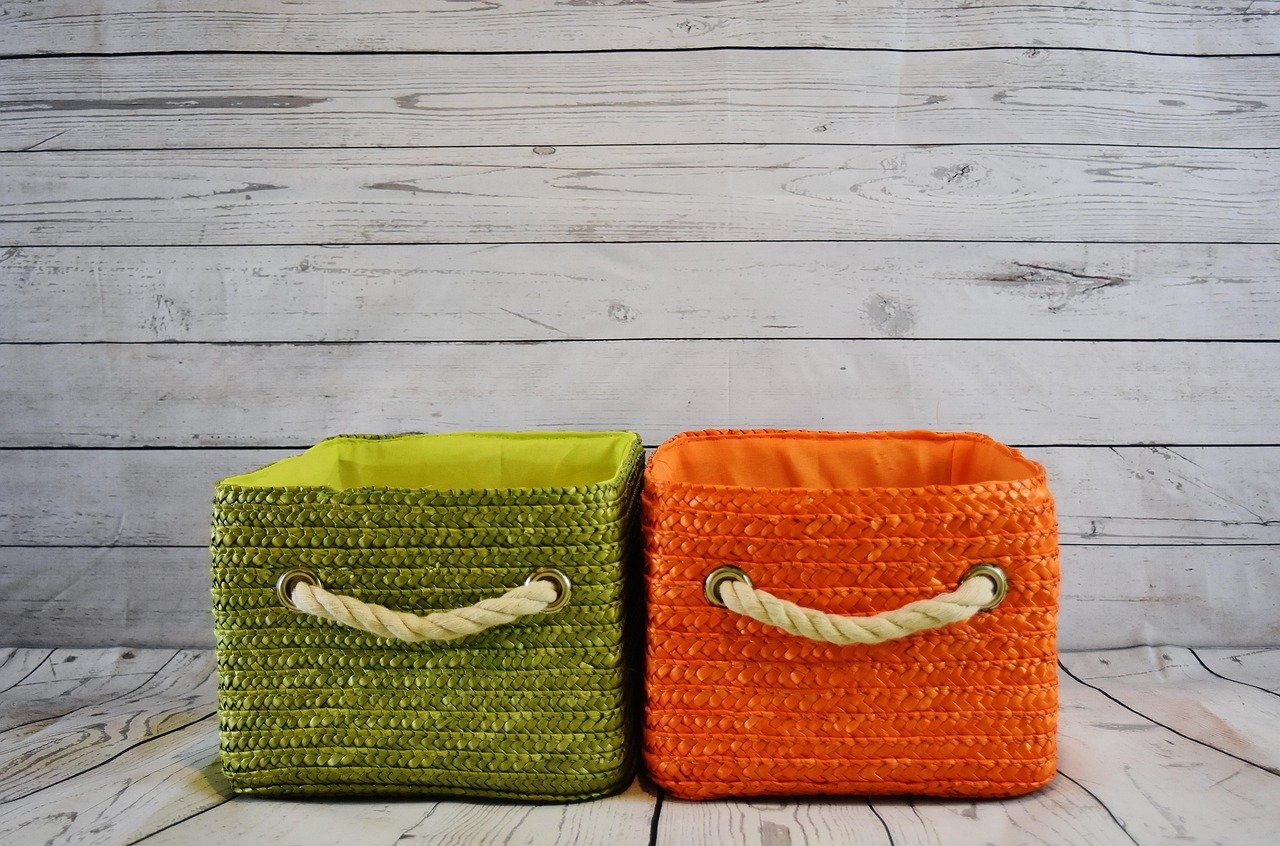
3. Woven Natural-Fiber Storage Baskets
Plastic bins have been the default entryway fix for years, but organizers are increasingly moving away from them in favor of natural materials that hold up to daily wear without looking like leftover moving supplies. As stylist Di Ter Avest has noted about the shift toward woven storage, pieces made from seagrass, rattan, or bamboo simply “feel warmer, last longer, and look intentional” than plastic equivalents. In a drop zone, baskets like these are what corral the smaller, harder-to-shelve items — gloves, sunscreen, dog leashes, reusable bags — that don’t have an obvious home anywhere else. Slide two or three onto an open shelf or bench, and they become a flexible catch-all that still looks finished instead of makeshift.
→ Shop Woven Natural-Fiber Storage Baskets on Amazon: View on Amazon →
4. All-Weather Boot Tray
A landing strip only works if it can survive actual weather, and nothing undoes an organized entryway faster than a puddle of melted snow or mud tracked onto hardwood. A boot tray sits right at the base of the drop zone, under the bench or shoe cubbies, and gives wet or dirty shoes a spot to dry off without soaking the floor or a rug underneath. It’s a small, unglamorous piece, but it’s the one that keeps the rest of the system from being abandoned the first rainy week. Look for a tray with a raised lip and enough length to hold four to six pairs of shoes side by side.
→ Shop All-Weather Boot Tray on Amazon: View on Amazon →
5. Charging Valet Tray
Keys and phones are the two things people search for most on their way out the door, and yet most homes still don’t give them a designated spot. A valet tray solves the keys half of that problem the old-fashioned way — a shallow dish by the door for keys, wallet, and loose change — while a charging valet tray solves both at once by adding a wireless charging pad underneath the dish. Set it on the entryway shelf or console and it becomes the one surface the whole household checks before leaving, which is really the entire point of a landing strip: fewer places to search, and nothing forgotten because it wasn’t where it was supposed to be.
→ Shop Charging Valet Tray on Amazon: View on Amazon →

6. Freestanding Coat Rack with Shoe Shelf
Renters and anyone in an apartment without a coat closet near the door run into the same problem: there’s nowhere to hang outerwear that doesn’t involve draping it over a chair. A freestanding coat rack solves that without any drilling, and the versions built with a shoe shelf at the base essentially fold two pieces of this whole system into one footprint — useful in a small entryway where a full bench and wall organizer won’t fit. It’s also the easiest piece to move if you relocate, which matters for the growing share of households organizing rentals rather than owned homes. Pick one with a wide, weighted base so it doesn’t tip when four coats and a backpack are hanging on one side.
→ Shop Freestanding Coat Rack with Shoe Shelf on Amazon: View on Amazon →
7. Entryway Storage Bench with Lift-Top
Once the wall and floor are handled, the last gap in most drop zones is seasonal overflow — winter gloves in July, summer sandals in January, the stuff you need occasionally but not daily. A lift-top storage bench hides that overflow inside the seat itself, so the entryway keeps its clean, finished look without those items taking up cubby or shelf space they don’t need year-round. It’s a slightly bigger investment than the other pieces here, but it’s often the one item that lets a household consolidate two or three of the smaller baskets and trays into a single, tidier piece of furniture, especially in an entryway that also has to double as a mudroom or reading nook.
→ Shop Entryway Storage Bench with Lift-Top on Amazon: View on Amazon →
None of these seven pieces fix a messy entryway on their own — the wall organizer without the boot tray just means wet shoes on a clean floor, and the valet tray without the coat rack still leaves jackets on a chair. What actually makes a landing strip work is treating it as one connected system, sized to how your household really moves through the door each morning, not to how a showroom entryway looks in a photo. Start with whichever piece matches your worst daily snag — for most people that’s either the shoe pile or the lost keys — and build outward from there. The rest of the system tends to follow once that first habit sticks.