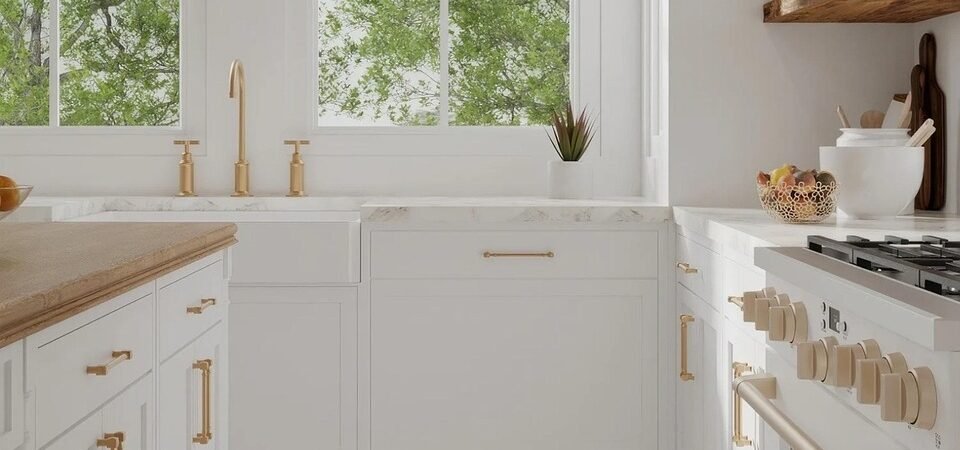
My kitchen came with exactly eleven inches of counter space and a single drawer that jams if you put more than two spatulas in it. When I moved in, I told myself I’d “figure it out” with a trip to a container store. Two years and several lopsided shelf-liner attempts later, I finally figured it out — not with a renovation, but with a handful of small, specific products that each solved one annoying problem at a time. That’s basically the whole story behind 2026’s small-kitchen storage trend, and it’s why I’m sharing what actually worked. Quick disclosure since a few of the picks below are Amazon links: if you buy through one, I earn a small commission at no cost to you, which is the only reason I can justify buying yet another drawer organizer to test in this eleven-inch kitchen. As an Amazon Associate, I earn from qualifying purchases.
Why 2026’s Kitchen Trend Skips the Renovation Entirely
For years, “fixing” a cramped kitchen meant tearing out cabinets or hiring a contractor. That’s shifted. Apartment Therapy published two separate roundups this September dedicated entirely to small, inexpensive kitchen storage — one on September 11 from Lifestyle Director Stephanie Nguyen, and another on September 23 from writer Alexa Casanova, both built around the idea that a $20 to $40 product can solve what used to require a remodel.
In Nguyen’s piece, editor-in-chief Charli Penn described a vertical storage rack she’d added to her own kitchen, saying it “really does create (lots) of space out of thin air.” That phrase — space out of thin air — is basically the mission statement for the whole trend: instead of expanding the room, you’re using the room you already have more precisely, from the inside of cabinet doors to the dead zone under the sink.
What I like about this approach is that it doesn’t require touching plumbing, drywall, or a landlord’s permission. It’s a weekend of small purchases, not a demolition. Below are the categories of products driving the trend, based on what these editors tested and what worked in my own too-small kitchen.
1. Claim the “Thin Air” Under Your Cabinets
The single biggest unused space in most kitchens is the gap between the bottom of your upper cabinets and your counter. A clip-on basket that hangs from that lip adds real storage — for dish towels, produce, or snack bags — without taking up an inch of counter or drawer space. Casanova described this exact style of basket in her September roundup as something that “clips onto the bottom of an upper cabinet to give you storage space out of thin air,” which is almost word for word what Penn said about her own vertical rack a week later. Two editors, two products, same instinct.
This is the fix I’d recommend first if you’re only going to do one thing on this list, because it’s the cheapest and the least committal — most versions clip on and off without tools or adhesive.
Shop under-cabinet hanging baskets on Amazon
2. Give Your Junk Drawer an Actual Job
Every kitchen has one drawer that’s technically for utensils but actually holds rubber bands, a broken can opener, and mystery keys. A sliding two-tier bin insert fixes this by adding a second layer inside the drawer, so small items like measuring spoons and bottle openers get their own slot instead of sinking to the bottom. It sounds minor until you’re not digging through a drawer at 7 a.m. looking for a whisk.
I was skeptical this would fit my drawer, which is narrower than standard, but the sliding versions adjust to different widths, which is the whole point — they’re designed for kitchens like mine, not showroom kitchens.
Shop sliding drawer organizer bins on Amazon
![[gaveta de cozinha aberta mostrando um organizador deslizante de duas camadas com talheres e utensilios pequenos organizados]](https://cadacanto.pulsozap.com/wp-content/uploads/2026/09/lote16-organization-mid1.jpg)
3. Move Spices Off the Counter and Onto the Fridge
If your spice jars live in a cabinet where you can’t read a single label without pulling half of them out, moving to magnetic tins on the side of the fridge solves two problems at once: you free up cabinet shelf space, and every jar is visible and labeled at eye level. It’s a small change, but it’s one of the most repeated tips across this year’s kitchen roundups, precisely because most refrigerators have several unused vertical feet of magnetic surface just sitting there.
The catch is finicky magnets that don’t hold on textured fridge doors, so it’s worth checking your fridge surface before you commit to a full set.
Shop magnetic spice tins on Amazon
4. Reclaim the Space Above Your Stovetop
Between burners, when the stove isn’t in use, is dead space most people never think to use. A heat-resistant silicone shelf with small dividers can hold spices, oils, or utensils right where you’re cooking, then lift off in seconds when you actually need the burners. It’s not a permanent fixture, which matters if your landlord (or your own future self, moving apartments again) needs the stove back to stock condition.
I use mine mostly for olive oil, salt, and pepper — the three things I reach for constantly and used to keep migrating around the counter.
Shop stovetop organizer shelves on Amazon
5. Stack Pans Vertically Instead of Stacking Them at All
Stacked pans are the enemy of a small kitchen — you always need the one on the bottom, and pulling it out means unstacking three others first. A peg-style vertical organizer, like the one Nguyen tested in her roundup with 18 adjustable pegs, lets you slot pans, lids, and baking sheets in upright instead, so each one lifts straight out without disturbing the rest.
This is the product on this list that took the most trial and error to arrange — it’s worth spending ten minutes actually testing peg placement with your specific pans before you call it done.
Shop adjustable cookware peg organizers on Amazon
![[armario aberto com panelas e tampas organizadas na vertical usando um suporte de pinos ajustaveis]](https://cadacanto.pulsozap.com/wp-content/uploads/2026/09/lote16-organization-mid2.jpg)
6. Double a Shelf Without Adding a Cabinet
Metal or bamboo shelf risers that sit inside an existing cabinet essentially double your usable shelf space by creating a second tier above your plates or bowls. Casanova’s roundup put it plainly: a set of these can “effectively double your cabinet space” for under $30. For anyone whose cabinets have a few inches of dead air above every stack of dishes, this is close to free square footage.
The stackable versions are worth the few extra dollars over fixed risers — you can nest them for storage if you ever move, rather than owning a shelf riser shaped exactly to one specific cabinet.
Shop expandable cabinet shelf organizers on Amazon
7. Stop Wasting the Space Under the Sink
The area under the kitchen sink is usually the most chaotic square footage in the whole room — a jumble of spray bottles, sponges, and trash bags around a pipe. A two-tier pull-out organizer, built to work around that pipe, was described in Casanova’s roundup as something that “practically doubles your storage” in that exact spot. Pulling the whole tray out instead of crouching and digging is a small change that makes a genuinely annoying chore easier.
Measure the width and depth around your pipes before ordering — this is the one item on the list where sizing actually varies enough to matter.
Shop under-sink pull-out organizers on Amazon
![[armario embaixo da pia da cozinha com um organizador deslizante de duas camadas ao redor do encanamento, produtos de limpeza organizados]](https://cadacanto.pulsozap.com/wp-content/uploads/2026/09/lote16-organization-mid3.jpg)
The Real Lesson: Small Fixes Beat One Big Renovation
None of these seven changes cost more than $40, and none of them required a single tool beyond scissors to open the packaging. That’s the actual shift behind this trend: for years, a cramped kitchen felt like a problem you’d solve “someday,” once you could afford a remodel. What editors like Nguyen, Penn, and Casanova are documenting this fall is that most of the frustration isn’t the kitchen’s size — it’s the handful of specific dead zones inside it that never got a purpose. Fix the space under the cabinet, inside the junk drawer, above the stove, and under the sink, and the kitchen itself starts to feel bigger, even though the walls never moved. My eleven inches of counter still aren’t much, but for the first time, none of them are wasted.