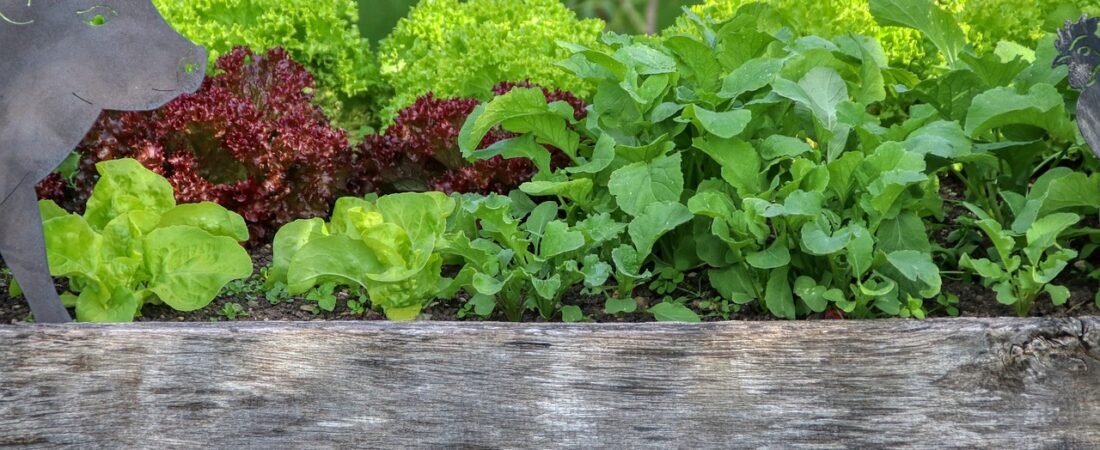
Every March, the same thing happens at the garden center on Route 9: the herb six-packs vanish first. By the second Saturday of spring, the basil and thyme flats are gone, the tomato starts are down to the leggy stragglers nobody wanted, and there’s a line at the register full of people who, a few years ago, would have walked straight past the vegetable section for the marigolds. Ask the woman third in line — cart loaded with two tomato plants, a packet of ‘pollinator mix’ wildflower seed, and three glazed terra-cotta pots for her apartment balcony — what she’s planning, and she’ll tell you the same thing gardeners everywhere are telling their neighbors this year: she wants her small patch of dirt, whatever size it is, to actually do something. Grow food. Feed the bees. Look like it belongs to someone who cares. That instinct, more than any single plant or product, is what’s shaping the yards taking off in 2026.
📷 FOTO DE CAPA: Foto ampla e luminosa de um quintal residencial dividido em “zonas” pequenas e bem definidas: um canteiro elevado de horta perto da cozinha, uma faixa de flores silvestres para polinizadores com borda bem marcada, e um conjunto de vasos grandes perto da porta. Luz natural de fim de tarde, estilo editorial (não still de produto).
The Return of the Kitchen Garden
For most of the last two decades, vegetables were something you hid: a raised bed tucked behind the garage, screened off from the patio where guests could actually see it. That’s reversing. Rising grocery prices, renewed interest in knowing exactly what’s been sprayed on what you eat, and a broader hunger for a little more self-sufficiency have pushed food-growing back toward the front of the property — sometimes literally the front yard, more often just the sunniest spot closest to the kitchen door, where it’s impossible to ignore. Designers are increasingly folding vegetables in with the ornamentals rather than segregating them, a modern take on the old European potager: a row of chard doing the visual work of a flowering perennial, pole beans trained up a decorative obelisk instead of a chain-link trellis.
You don’t need a design degree to start. On a tight budget, three or four terra-cotta pots of herbs by the back door will get used more than any ornamental planting you own. With a modest budget, a pair of cedar raised beds along a south-facing fence, filled with a mix of vegetables and cutting flowers, does double duty as food and as a genuinely good-looking border. If you have real money to put into it, a designed potager — structured beds, gravel paths, a support obelisk or two, positioned somewhere you’ll walk past daily — turns food-growing into one of the most-used parts of the whole property instead of a chore you drive out to on Sundays.
Pollinator Strips and Wildlife Corridors
Alongside the vegetables, a second, related shift is showing up: strips and borders planted specifically to feed pollinators, not people. Landscape designers Catherine Trudeau and Paul Blanding of The Outside Design Studio describe it as a way for homeowners to take an active role in what’s happening in their own backyard ecosystem — “We think they’re a nice way to play a part in the ecosystem happening in your own backyard,” as they put it. And the scale is flexible: Megan Bryant, lead horticulturist and landscape designer at Collington, notes that a pollinator strip “can take up large swaths of open acreage or inhabit an area as tiny as the front patch of grass where your mailbox lives.”
The trick, according to Trudeau and Blanding, is discipline at the edges even when the planting inside is loose and naturalistic: “A good garden should always have good bones, but in the case of pollinator strips, the organization of the garden needs to be even more apparent,” they explain — or, more bluntly, “messy systems require neat frames.” A crisp mowed edge, a steel or brick border, a clearly defined shape reads as intentional to a neighbor even when the flowers inside are doing whatever they want. At the low end, that’s a shovel-cut strip of native wildflower seed along the mailbox, mowed clean on both sides. At a mid-range budget, it’s a properly edged border with plants chosen for staggered bloom times, so something is always flowering for whatever’s passing through. At the high end, a designer can weave a pollinator corridor through the whole property, connecting flower borders to a rain garden or a meadow patch at the property line.
📷 ADICIONE UMA FOTO AQUI: Foto próxima de uma faixa de flores silvestres (pollinator strip) com borda de metal ou tijolo bem definida, abelhas ou borboletas visíveis, mostrando o contraste entre a bagunça controlada das flores e a moldura organizada ao redor.
Expressive, Statement-Making Entrances
The front door is getting the kind of attention that used to be reserved for the backyard. “Homeowners are really upping their game of transforming the front entranceway as an extension of their interior,” says Laura Janney, CEO of The Inspired Garden Masterclass. It’s a natural extension of how much time people now spend curating the rooms just inside that door, and it isn’t only about plants: “While container gardens set the stage, it’s the addition of seating, decorative sculptures, and other elements that create a standout moment,” Janney adds. A porch is being treated less like a pass-through and more like a small outdoor room with its own personality.
This one scales down easily. A fresh coat of paint on the door and a matched pair of well-planted urns flanking the steps costs a weekend and a modest budget, but it changes how the whole house reads from the street. A step up, add a small bench or seating nook by the door, swap dated house numbers and a builder-grade light fixture for something with real character. At the top end, this becomes a genuine hardscape project — a redesigned walkway, structured planting beds instead of foundation shrubs, maybe a piece of sculpture or a small water feature that gives arriving guests something to notice before they even reach the door.
Right-Sized Fire Features
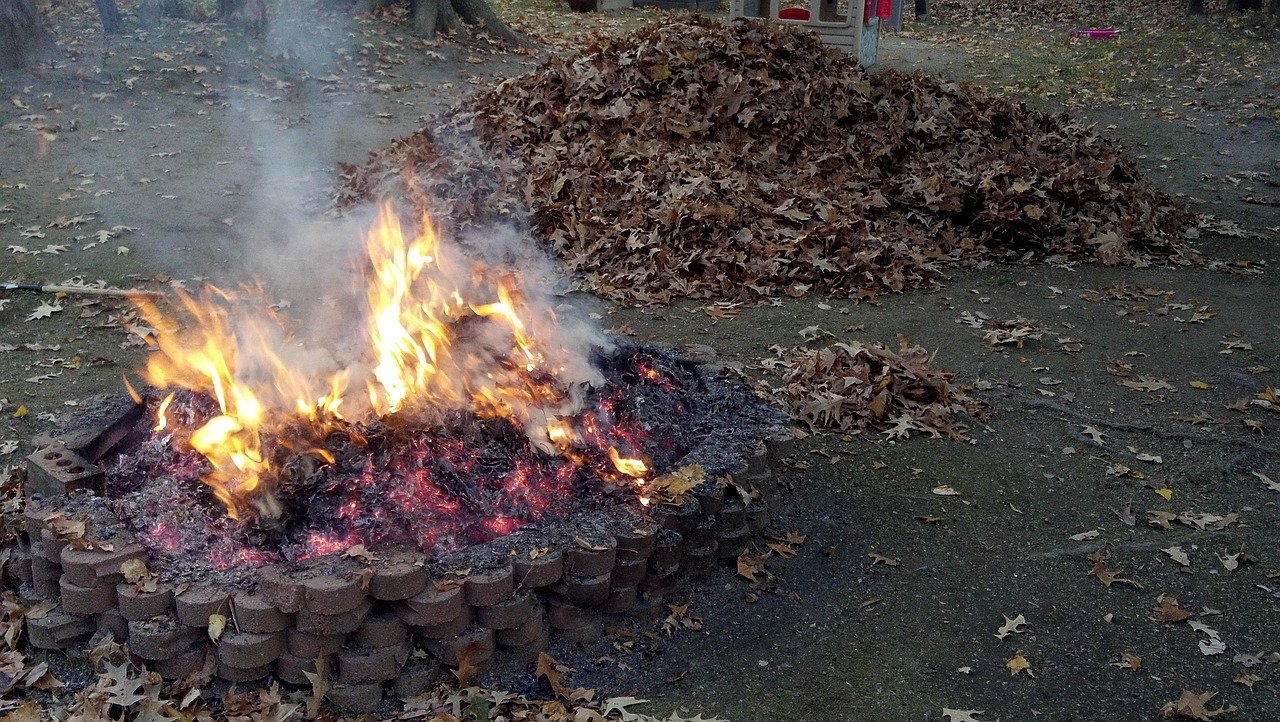
The oversized built-in fire pit that eats a third of the patio is losing ground to something smaller. “I think 2026 is looking like a year for a relaxed and functional look, not something industrial,” says landscaping expert Dawn De Feo. Garden designer Oliver Burgess sees the same thing in his own client work: “Many clients prefer a smaller fire bowl or chiminea, leaving more room for planting and seating.” It’s a direct consequence of everything else happening in these yards — when the food beds and pollinator strips and container groupings are all competing for square footage, a fire feature has to earn its footprint rather than claim the whole one.
A steel fire bowl from the hardware store, set on a patch of gravel with a couple of folding chairs, covers the low end for well under a couple hundred dollars. A mid-range option is a proper chiminea or a cast fire bowl on a small paved or gravel pad, with simple built or purchased bench seating around it. At the high end, a custom stone-clad fire bowl with an integrated bench reads as a permanent architectural feature rather than a patio accessory — but even then, the goal is restraint: something that anchors an evening without swallowing the garden around it.
📷 ADICIONE UMA FOTO AQUI: Foto noturna aconchegante de uma fire bowl pequena e simples (não uma lareira grande de alvenaria), com cadeiras ao redor e canteiros de plantas visíveis nas bordas do espaço, mostrando que o jardim continua sendo o protagonista.
The Pared-Back Backyard Bar
After a few years of yards built mainly for solitary unwinding, 2026 brings back the social evening. “Now it’s time for the return of the backyard party,” says designer Nicole Alexander. “Gather your friends and neighbors around a proper backyard bar that is well-stocked, with additions like ceiling fans.” But the emphasis is on proper, not sprawling — this isn’t the three-burner, pizza-oven outdoor kitchen of a decade ago. Landscape designer Tina Huffman puts it plainly: “Go with a high-quality grill paired with generous countertop space, an outdoor fridge, and a small sink, with thoughtfully designed seating areas.” The goal is a station that actually gets used on a Tuesday, not a showpiece that only comes alive twice a summer.
On a small budget, a rolling bar cart stocked with glassware and a couple of folding chairs does exactly what Alexander is describing, no construction required. A mid-range approach adds a small built-in counter with a beverage fridge tucked underneath, positioned near enough to the seating that nobody has to walk far for a refill. At the higher end, Huffman’s formula — grill, counter, fridge, sink, real seating — turns the space into something closer to a second living room, just one where the walls happen to be hedges.
Container Gardening as Architecture
Pots are doing more than holding plants that didn’t fit in the ground. Garden designer Nick Baldwin describes a recent project where containers effectively became the structure of the garden: “I designed a series of curved planters revolving around a central feature tree as part of this garden redesign,” he says, “I chose plants with a Mediterranean theme, as the garden has an open, sunny site. They are intended to flop over the edges of the planters and intermingle.” Rather than sitting as isolated accessories, the planters shape how a person actually moves through the space, curving a path or framing a seating area the way a low wall might.
Renters and small-space gardeners are borrowing the same logic without the construction. A trio of matched pots grouped by the door reads as a designed moment rather than three separate plants. A run of identical planters along a fence line can define an entire outdoor room with no digging at all. And for anyone with the budget and a fixed spot they want to transform, custom-built curved or oversized planters — in the spirit of Baldwin’s design — let plantings spill and intermingle exactly the way his Mediterranean grouping does, giving even a small, hard-surfaced yard the layered, established feel of a much older garden.
📷 ADICIONE UMA FOTO AQUI: Foto de um agrupamento de vasos grandes e combinando (terracota ou concreto), plantas transbordando pelas bordas, organizados perto de uma árvore ou junto a uma parede, criando um efeito arquitetônico e não apenas decorativo.
Back at the garden center, the woman with the tomato starts and the wildflower seed packet checks out and heads for her car, and what’s in her trunk has more in common with a to-do list than a shopping bag: something to eat, something for the bees, something to make the front steps look cared for. None of it is expensive, and none of it required tearing out what was already there. That’s really the throughline across all of this — 2026 isn’t asking anyone’s yard to look like a different yard. It’s asking every part of it, down to the strip by the mailbox and the pots by the door, to actually be doing something.