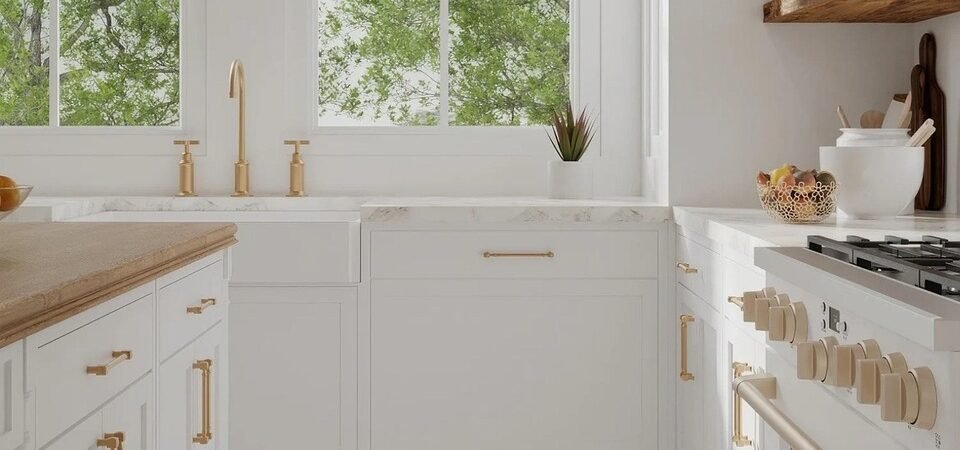
My sister-in-law spent an entire Sunday night feeding photos of her dated kitchen into an AI design app, swapping in white oak cabinets, a marble-look island, and a completely different layout in about twenty minutes. By Monday morning she had a folder of renderings, a rough sense of what she wanted, and zero idea of how to actually get a contractor to build any of it. That gap between generating an idea in seconds and executing it in real plaster and plumbing turns out to be exactly where the American renovation industry finds itself in 2026. Homeowners have quietly gone all-in on AI as a mood board, and the data on how they’re actually using it, and where they still draw the line, says a lot about where home design is headed next.
The Numbers Behind the AI Renovation Boom
The clearest picture yet comes from Houzz’s 2026 State of AI in Construction and Design study, which surveyed 3,149 renovating homeowners and 601 construction and design professionals in June and July of 2026. The topline finding: 22% of homeowners say they’ve used an AI tool somewhere in their renovation process this year, up sharply from a year earlier, though the number swings wildly by generation. Forty-one percent of millennials have used AI for a renovation project, compared with 27% of Gen X homeowners, 17% of baby boomers, and just 7% of seniors. Most of that usage is casual rather than specialized: 63% of homeowner AI users say they’re relying on free, general-purpose tools, and 79% specifically point to general chatbots rather than dedicated design software.
A separate 2026 survey from Acorn Finance, polling 1,000 U.S. homeowners, found an even broader appetite for AI in home projects: 71% said they either use or plan to use AI for home-related questions, planning, or decisions, and 46% said they engage with AI on a near-daily basis, a pattern led by Gen Z and millennial respondents. Together, the two surveys sketch the same shape from different angles: AI has become a default first stop for homeowners thinking about a project, even if what happens next still looks a lot like it did a decade ago.
What Homeowners Actually Use AI For
The Houzz data is specific about where AI is earning its keep and where it isn’t. Homeowners’ top uses are almost entirely about the imagination stage of a project: 64% use AI to gather design ideas, 58% to visualize concepts, and 50% to compare layouts or products. Usage falls off fast once a project moves toward anything with real stakes attached. Only 24% use AI to estimate costs, 11% to plan timelines, 10% to help with permitting, and a mere 6% say they’ve used it to understand a contract. The Acorn Finance survey found similar comfort with AI on the planning side, reporting that 78% of homeowners said AI made purchases feel easier by helping them compare prices, materials, or vendors, and that 52% said AI surfaced ideas they hadn’t considered on their own, boosting their confidence going into a project.
Read together, the picture is less “AI is redesigning American homes” and more “AI has become the free consultation homeowners never used to get.” It’s a sketchpad and a search engine rolled into one, useful for narrowing down a vision before anyone picks up a phone to call a contractor.

Professionals Are Adopting It Even Faster
If homeowners are dabbling, the professionals who actually execute their renovations are moving much faster. Houzz found that 41% of construction and design firms now use AI for everyday business tasks, up seven percentage points from the prior year, and 97% expect AI to meaningfully change their industry within five years. Construction firms in particular reported using AI daily at a rate of 80%, with the most common applications being sales and marketing (64%), planning and design (61%), and project or client management (59%). Design firms reported doubling their use of AI for planning and design work, from 34% to 68% year over year, and 82% now use it to generate pre-project visuals for clients.
“Professionals are folding AI into their everyday workflows and seeing significant time and cost savings,” said Alon Cohen, Houzz co-founder and CEO, in comments on the survey results. The numbers back that up: firms using AI reported saving an average of 3 to nearly 5 hours a week, translating into estimated annual productivity gains ranging from roughly $80,000 for design firms to $244,000 for construction firms.
Why AI Hasn’t Replaced the Contractor
Despite all that enthusiasm on both sides, the survey found no sign that AI is cutting professionals out of the process. A full 80% of homeowners say they still plan to hire a professional to execute their vision, and 38% of those who haven’t used AI say they specifically prefer the judgment and expertise of a real person over anything a tool can generate. Trust in the accuracy of AI outputs remains a real sticking point industry-wide, too: 37% of professionals surveyed said they’re concerned about reliability and accuracy, up from 33% the year before, even as adoption climbs.
That combination, rising use paired with real skepticism, suggests AI is settling into a specific, bounded role in home renovation rather than an ever-expanding one. It’s trusted for brainstorming and rejected for anything that touches a budget, a permit, or a signature.
The New Homeowner-Pro Dynamic
Maybe the most interesting shift isn’t how homeowners use AI on their own, but how it’s changing the conversation once a professional gets involved. Among homeowners whose contractor or designer used AI during their project, 76% said it helped them visualize what was being proposed, 49% said it helped them better understand the professional’s ideas, and 35% said it made the pro seem more prepared going in. In other words, AI is increasingly functioning as a shared language between homeowner and professional, a way of closing the gap between “I want something like this” and a set of drawings a contractor can actually price out and build.

That reframes the AI-in-renovation story in a useful way. It isn’t a story about software replacing expertise, and it isn’t a story about homeowners suddenly becoming their own designers. It’s a story about the handoff between imagination and execution getting a little smoother, one renovation at a time.
What This Means for Your Next Project
For homeowners plotting their own renovation this fall, the takeaway from the data is refreshingly practical: use AI for exactly what it’s good at, and don’t expect it to do more than that. Feed it photos of your space, ask it to generate a dozen versions of a room, use it to build a shared vocabulary before your first meeting with a contractor or designer. But budget the real number crunching, the permitting, and the fine print of any contract to the humans in the room, because that’s precisely where homeowners themselves say they still don’t trust a chatbot, and where the survey data suggests they’re right not to.
My sister-in-law’s renovation folder, it turns out, wasn’t wasted effort. She showed those AI renderings to three different contractors before picking one, and all three told her it was the clearest anyone had ever walked in and explained what they wanted. The kitchen that eventually got built didn’t look exactly like the AI version, wood tone was warmer, the island ended up a different shape, but it got built faster and with far less back-and-forth than her last renovation, back when all she had to work with was a stack of torn-out magazine pages and a lot of hand-waving. That, more than any single statistic, might be the real story of AI in home design this year: not a replacement for good instincts or skilled hands, but a translator that finally lets the two speak the same language from day one.