My cousin repainted her entire apartment in shades of “quiet luxury” beige two years ago, and last month she called me, paint swatches in hand, asking if it was “allowed” to bring back the striped wallpaper she’d loved in her twenties. It is. After nearly a decade of interiors built around restraint — one neutral sofa, one statement lamp, everything else edited out — 2026 is the year pattern, color, and personal collections are openly welcomed back into the room. It isn’t a return to clutter. It’s a return to rooms that look like someone actually lives in them, curated on purpose instead of pared down out of fear of getting it wrong.
Curated Maximalism Replaces the All-Neutral Room
Interior designer Marianne Jones describes the shift plainly: 2026 interiors will feature “layered textures, patterns, bold colors, vintage heirlooms” brought together with intention rather than restraint. The key word design writers keep repeating is curated — this isn’t a return to over-stuffed, mismatched rooms, it’s a conscious layering of pieces that mean something to the people who live there. A grandmother’s rug next to a bold new armchair, a gallery wall mixing eras, a mantel that tells a story instead of displaying three identical vases — that’s the version of maximalism taking hold this year.
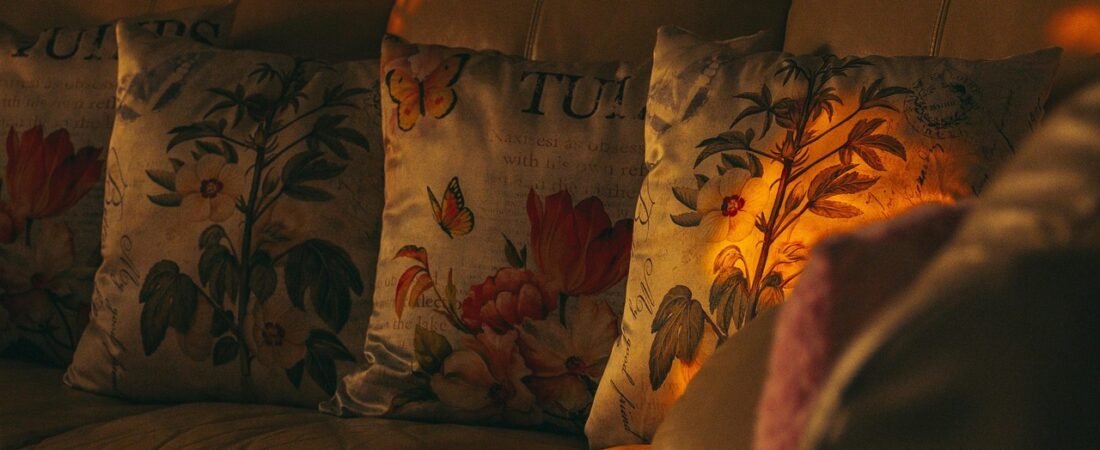
Patterned Textiles Are the Easiest Way In
For anyone hesitant to repaint a whole room, textiles are the low-risk entry point designers are pointing to first. Jones notes that patterned textiles “bring soul, story, and longevity to the room,” and that’s exactly why a bold throw pillow, a patterned lampshade, or a printed roman shade can shift a space without the commitment of wallpaper. The pattern doesn’t need to match the rest of the room’s palette exactly — the current look leans into contrast, an unexpected floral next to a geometric rug, rather than the tightly coordinated textile sets that defined the previous decade.
The Ceiling Becomes the “Fifth Wall”
Designer Jasmin Reese has been vocal about a specific shift: treating the ceiling as “the fifth wall” instead of an afterthought painted flat white. A patterned wallpaper, a bold color, or even a mural overhead turns an ordinary room into one with a clear point of view, and it’s an easier commitment than most people assume — a ceiling is often a smaller surface area than a single accent wall, and it’s the one part of a room that isn’t interrupted by furniture, outlets, or doorways.
Hospitality-Inspired Layering
Elliot March points to a “greater fluidity and interest in hospitality design” showing up in private homes — the kind of layered lighting, mixed textures, and considered vignettes that make a boutique hotel lobby feel more finished than most living rooms. In practice, that means fewer rooms lit by a single overhead fixture and more lamps at varying heights, more surfaces holding a small curated object instead of nothing at all, and upholstery mixed in tone rather than matched piece for piece.
Vintage Heirlooms Anchor the New Maximalism
What separates curated maximalism from the maximalism of a decade ago is where the pieces come from. Instead of buying an entire matched living room set, the trend leans on vintage finds, inherited furniture, and one-of-a-kind pieces mixed with newer basics. A single vintage side table or an inherited mirror does more to make a room feel collected than an entire new furniture line, and it’s part of why this version of “more” reads as intentional rather than accidental.
Mixing Eras Instead of Matching Them
Design coverage of the 2026 season keeps circling back to one specific habit: pairing pieces from different decades in the same room rather than buying a single matched collection. A 1970s brass floor lamp next to a brand-new boucle chair, or a set of inherited dining chairs reupholstered in a bold contemporary print, does more to make a room feel collected over time than anything bought as a complete set ever could. The mismatch is the point — it signals a room built gradually, by someone with actual taste, rather than furnished in a single afternoon off one catalog page.
Where to Start If This Feels Like a Lot
None of this requires redecorating in a weekend. Start with one textile — a patterned pillow cover, a printed throw — and see how it changes the room before committing to a ceiling color or a wallpapered wall. Pull one vintage or inherited piece out of storage and give it a place of honor instead of leaving it boxed up. The rooms getting the most attention in 2026 aren’t the ones that spent the most; they’re the ones where every piece, old or new, patterned or plain, was chosen on purpose.
My cousin ended up painting just one wall in a narrow stripe, not the whole room, and it’s the first time in years she’s mentioned actually liking a space she designed instead of just tolerating it. That’s the real shift behind this trend — not more stuff, just rooms that finally look like the people living in them again.